
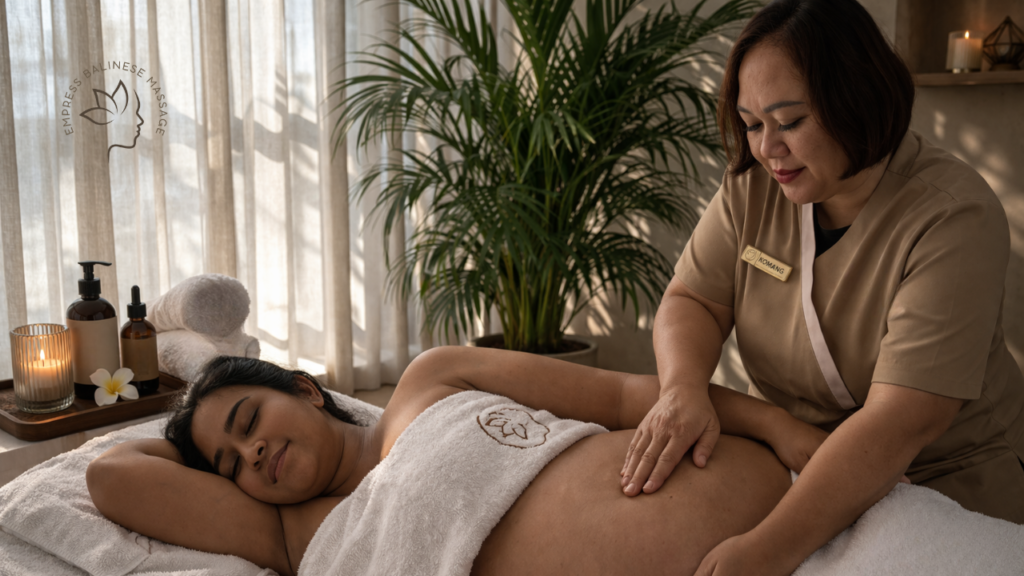
Prenatal massage after 20 weeks may be suitable for many expectant mothers when the pregnancy is progressing normally, the therapist follows pregnancy-specific safety practices and the treatment is adapted to the client’s comfort.
However, prenatal massage is not automatically suitable for every pregnant woman simply because she has reached 20 weeks.
A responsible prenatal massage Dubai service should begin with a consultation, use supported positioning and recognise when medical approval may be needed. The therapist should also adjust the pressure, technique and duration according to the client’s pregnancy stage and how she feels on the day.
At Empress Balinese Massage, pregnancy massage bookings begin from 20 weeks onward. This is a cautious service policy designed to create a clear and consistent safety standard.
Why Is 20 Weeks an Important Starting Point for Empress?
Empress has chosen 20 weeks as the starting point for its prenatal massage service because pregnancy massage requires more than changing a few movements from a standard massage routine.
The booking process, client consultation, body positioning, pressure level and support equipment all need to be considered before the treatment begins.
Starting from 20 weeks allows Empress to follow a structured prenatal approach that includes:
- Confirming the client’s pregnancy stage
- Discussing current symptoms and comfort
- Identifying concerns that may require medical approval
- Using supported side-lying positioning
- Avoiding direct abdominal massage
- Adjusting pressure according to the body area
- Avoiding hot stone treatments during pregnancy
The 20-week policy does not suggest that massage before this stage causes pregnancy complications. It is simply the point from which Empress has chosen to provide its specialised prenatal service.
What Makes Prenatal Massage Safe and Appropriate?
Safety does not depend on the pregnancy week alone.
A suitable prenatal treatment is shaped by several factors, including the client’s health, pregnancy history, current symptoms, positioning and the therapist’s ability to adapt throughout the session.
A Consultation Before Treatment
Every Empress prenatal session begins with a consultation.
The therapist may ask how many weeks pregnant the client is, how the pregnancy is progressing and whether there are any concerns her doctor or midwife is currently monitoring.
The client should mention any recent changes, even if they do not appear directly connected to massage.
This may include:
- Unexplained bleeding
- Severe or unusual swelling
- High blood pressure
- Placenta-related concerns
- Blood-clotting conditions
- Significant varicose veins
- Multiple pregnancy
- A pregnancy classified as high risk
- New pain or unusual symptoms
- Advice already provided by a maternity healthcare professional
The therapist is not there to diagnose the client. These questions help determine whether the treatment can proceed, whether it should be adapted or whether medical approval should be requested first.
Comfortable, Supported Positioning
A pregnant client should not be expected to lie in a standard massage position for the entire session.
Empress performs prenatal massage predominantly in a supported side-lying position. A Doomoo pregnancy pillow and additional support pillows may be used around the abdomen, back, hips, shoulders and legs.
The arrangement is adapted to the individual.
One client may need more support beneath the upper leg. Another may feel more comfortable with additional cushioning behind her back. As the pregnancy progresses, these preferences may change.
The therapist can reposition the pillows or adjust the treatment whenever the client feels pressure, numbness, dizziness or discomfort.
Pressure That Responds to the Body
Pregnancy massage does not need to feel painful or extremely deep.
Pressure should be discussed before the massage and continuously adjusted during the session. Certain areas may feel comfortable with slow, focused work, while others may need a gentler technique.
An experienced therapist also pays attention to non-verbal signs.
If the client begins holding her breath, tightening her shoulders, guarding her lower back or moving away from the therapist’s hands, the pressure may need to change.
The aim is not to follow a predetermined level of intensity. The treatment should respond to the client’s body and comfort on that particular day.
What Areas Can Be Massaged During Pregnancy?
A prenatal massage may focus on suitable areas such as the back, shoulders, arms, hips, legs and feet.
The exact treatment depends on the client’s comfort and any areas that require additional caution.
Empress does not directly massage the abdomen during prenatal treatments.
The therapist also considers how different areas of the body may be connected. For example, a client may describe lower-back discomfort, but the therapist may notice that she is changing the way she walks or placing more weight on one side.
Without diagnosing the cause, the therapist can use these observations to create a more balanced and personalised treatment.
When Should Prenatal Massage Be Postponed?
There are situations where massage should not proceed without medical guidance.
Empress may postpone a session or recommend that the client speak with her maternity healthcare provider if she reports:
- Active or unexplained bleeding
- Suspected blood clot
- Painful or unusual swelling in one leg
- Preeclampsia
- Uncontrolled hypertension
- Placenta previa
- A blood-clotting condition
- A high-risk pregnancy
- Severe or unusual symptoms
- A recent medical concern that has not been assessed
Sudden breathlessness, chest pain, heavy bleeding or other serious symptoms require medical attention rather than a massage appointment.
These precautions are not designed to make pregnancy massage feel frightening. They are part of a professional boundary between wellness support and medical care.
Massage may support comfort and relaxation, but it does not diagnose pregnancy conditions or replace advice from a doctor or midwife.
Is Deep Pressure Safe During Prenatal Massage?
Some pregnant clients prefer firmer pressure, especially around the shoulders, upper back or hips. However, the pressure used during prenatal massage should always be assessed by body area and adjusted gradually.
Deeper pressure is not automatically more effective.
A therapist should never assume that discomfort is necessary for the massage to work. If pressure feels sharp, overwhelming or causes the client to tense, it should be reduced.
At Empress, the therapist communicates throughout the treatment and watches how the client responds. Pressure may be changed several times during one session.
This personalised approach is particularly important because pregnancy symptoms and sensitivity can change quickly.
Are Hot Stones or Aromatherapy Oils Used?
Empress does not provide hot stone massage during pregnancy.
Prenatal sessions instead focus on pregnancy-appropriate massage techniques, supported positioning and controlled pressure.
Aromatic oils and scents also require additional care during pregnancy. Personal preferences, sensitivities and suitability should be discussed before anything scented is used.
A client who feels nauseated or sensitive to fragrance may prefer a more neutral treatment.
The atmosphere should support relaxation rather than overwhelm the senses.
What Should You Expect During a Prenatal Massage at Home?
A premium pregnancy massage Dubai service should make the experience feel calm from the moment the booking is confirmed.
The Empress therapist arrives approximately 10 to 15 minutes early to prepare the space and complete the consultation without rushing.
She brings the required equipment, which may include:
- A professional massage table
- Freshly laundered linens
- Clean towels
- Suitable massage oil
- A Doomoo pregnancy pillow
- Additional support pillows
The therapist sets up neatly and with minimal disruption to the home or hotel room.
Before the massage begins, the client’s comfort, pressure preferences and focus areas are discussed. The position and pillow support are then arranged around her body.
During the treatment, the therapist may pause, change the pressure or adjust the pillows. The session should never feel like a fixed routine that must be completed exactly as planned.
Afterward, the equipment is packed quietly, allowing the client to remain at home and continue resting without facing Dubai traffic, parking or a journey back from a spa.
How Can You Prepare for a Prenatal Massage?
Preparing for a prenatal massage is usually simple.
Wear comfortable clothing before the appointment and choose a quiet area where the therapist has enough space to set up the massage table.
It is also helpful to:
- Share your correct pregnancy week when booking
- Mention whether the pregnancy is high risk
- Explain any recent symptoms or medical advice
- Avoid hiding discomfort because you do not want to cancel
- Tell the therapist which positions currently feel comfortable
- Communicate your pressure preferences
- Speak up immediately if something changes during the session
Honest communication helps the therapist make better decisions and create a more comfortable experience.
How Is the Empress Approach Different?
Empress does not treat pregnancy massage as a shortened version of a regular massage.
The therapist observes how the client moves, breathes, sits and changes position before beginning. She may notice that one hip needs more support, that the client is protecting her lower back or that the shoulder muscles tighten when she turns.
These details influence the massage.
The therapist may spend more time on the areas that matter most, reduce pressure where sensitivity is higher or adjust the sequence entirely.
This is what personalisation looks like in practice. It is not simply asking whether the client prefers light, medium or firm pressure. It is continuing to observe, communicate and adapt throughout the appointment.
Frequently Asked Questions
Is prenatal massage safe at 20 weeks pregnant?
Prenatal massage may be suitable at 20 weeks when the pregnancy is progressing normally and there are no concerns requiring medical assessment. The session should include a consultation, supported positioning and pregnancy-appropriate techniques. Clients with a high-risk pregnancy or unusual symptoms may need approval from their doctor or midwife before booking.
Why does Empress start prenatal massage from 20 weeks?
Empress begins prenatal massage from 20 weeks as part of its safety-led service policy. This creates a consistent starting point for applying prenatal consultation procedures, side-lying support, pressure adjustments and referral boundaries. It does not mean massage before 20 weeks is universally harmful.
Do I need permission from my doctor?
Not every uncomplicated pregnancy requires written medical approval. However, your doctor or midwife may need to approve the massage if your pregnancy is considered high risk or you have bleeding, high blood pressure, placenta previa, unusual swelling, a blood-clotting condition or another medical concern.
Can prenatal massage be performed while lying on the side?
Yes. Empress predominantly uses a supported side-lying position for prenatal massage. A pregnancy pillow and additional support pillows are placed around the abdomen, back and legs. The therapist adjusts the setup based on your pregnancy stage and comfort.
Is the stomach massaged during pregnancy massage?
No. Empress does not directly massage the abdomen during prenatal treatments. The therapist may focus on suitable areas such as the back, shoulders, arms, hips, legs and feet. The treatment plan is personalised according to comfort and suitability.
Is strong pressure allowed during prenatal massage?
Pressure can be adjusted, but it should never feel uncontrolled or excessively painful. The therapist considers the body area, pregnancy stage and your physical response before increasing intensity. Certain areas require a lighter and more cautious approach.
Can I have hot stone massage after 20 weeks?
No. Empress avoids hot stone massage throughout pregnancy. Prenatal clients receive pregnancy-appropriate techniques with supported positioning and personalised pressure instead.
Can I book prenatal massage in a Dubai hotel?
Prenatal massage may be available in Dubai hotels, subject to therapist availability and the hotel’s visitor policies. You should confirm access requirements with the hotel before the appointment. The therapist brings the massage table, linens, towels, suitable oil and pregnancy support equipment.
How often can I book prenatal massage?
There is no single schedule suitable for every pregnant client. Frequency depends on your pregnancy stage, comfort, general health and guidance from your maternity healthcare provider. Some clients may prefer occasional appointments, while others include massage more regularly in their wellness routine.
Can prenatal massage induce labour?
Prenatal massage should not be promoted as a way to induce labour. Empress provides pregnancy massage to support comfort, calm and relaxation. It does not replace maternity care or guarantee any pregnancy or labour-related outcome.
Book a Personalised Prenatal Massage in Dubai
From 20 weeks onward, Empress Balinese Massage offers personalised prenatal massage in the comfort of your Dubai home or hotel.
Every session begins with a consultation and is adapted around your pregnancy stage, positioning needs and pressure preferences.
Speak with the Empress team before booking if you have a high-risk pregnancy, recent symptoms or concerns about whether prenatal massage is suitable for you.
