
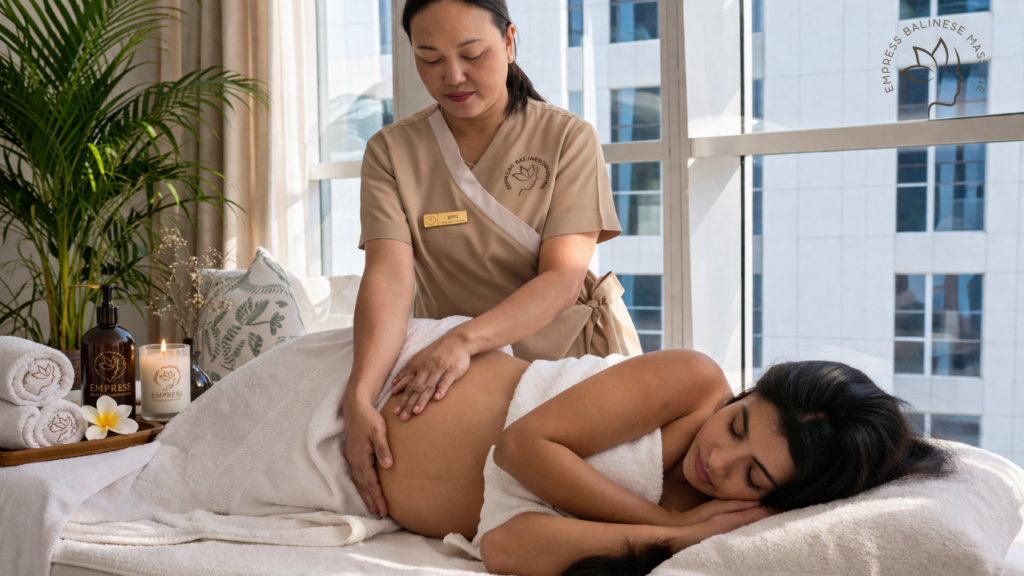
Empress Balinese Massage accepts pregnancy massage Dubai bookings from 20 weeks onward. This is a carefully chosen service policy designed to support consistent safety checks, comfortable positioning and a treatment that can be adapted to each stage of pregnancy.
It does not mean that massage before 20 weeks is harmful for every pregnant woman. It also does not mean that reaching 20 weeks automatically makes massage suitable for everyone.
Every pregnancy is different. This is why Empress begins each prenatal session with a consultation rather than following the same routine for every client.
Why Does Empress Wait Until 20 Weeks?
Many expectant mothers ask why they cannot book a massage during the earlier weeks of pregnancy.
Empress has chosen 20 weeks as the starting point for its prenatal massage service because it creates a clear and cautious standard for both clients and therapists.
From 20 weeks onward, the team follows a structured approach covering:
- Pregnancy stage and current comfort
- Supported massage positioning
- Pressure preferences
- Symptoms that may require additional caution
- Areas that should be avoided
- Situations where medical approval may be recommended
This boundary helps ensure that pregnancy massage is never treated as a standard full-body massage with only a few minor adjustments.
Prenatal massage requires a different approach from the moment the booking is made. The therapist must consider the client’s pregnancy stage, physical comfort and any concerns that could affect whether the session should proceed.
The 20-week starting point is an Empress service policy. It is not a claim that massage during the first trimester causes pregnancy complications.
Reaching 20 Weeks Is Only One Part of the Decision
A client’s pregnancy week is important, but it is not the only factor considered before a prenatal massage Dubai session.
The therapist also needs to understand how the pregnancy is progressing and whether there are any symptoms or medical concerns that should first be discussed with a doctor or midwife.
Before treatment, the client may be asked about:
- Whether the pregnancy is considered high risk
- High blood pressure or preeclampsia
- Placenta previa or another placenta-related concern
- Unexplained bleeding
- Severe or unusual swelling
- Blood-clotting conditions
- Significant varicose veins
- Multiple pregnancy
- Recent changes requiring medical assessment
- Guidance already given by a maternity healthcare provider
The therapist does not diagnose medical conditions. These questions allow the therapist to identify when a massage may need to be changed, postponed or approved by the client’s healthcare provider.
For Empress, trust begins before the therapist starts the treatment.
How Is Pregnancy Massage Different?
Pregnancy massage should not follow a memorised sequence.
As pregnancy progresses, the body can feel different from one week to the next. A position that felt comfortable during a previous session may no longer provide enough support. An area that tolerated firmer pressure before may feel more sensitive during the next appointment.
An experienced therapist pays attention to more than the area the client says feels uncomfortable.
Before starting, the therapist may notice:
- Whether one shoulder sits higher than the other
- How the client walks or changes position
- Whether she protects her lower back while moving
- Whether certain muscles tighten before being touched
- How comfortably she is breathing
- Whether more support is needed around the hips, abdomen or legs
These small observations help shape the treatment.
The therapist may spend more time on one area, reduce pressure in another or reposition the support pillows during the session. The massage adapts to the client instead of expecting the client to adapt to a fixed routine.
How Is the Client Positioned?
Empress performs pregnancy massage predominantly in a supported side-lying position.
A Doomoo pregnancy pillow and additional support pillows may be placed around the body to support the abdomen, back, hips, shoulders and legs.
The positioning is personalised according to:
- The client’s pregnancy stage
- The size and position of the abdomen
- Lower-back or hip sensitivity
- Shoulder comfort
- Breathing
- Personal preference
The same pillow arrangement will not work for every pregnant client.
During the session, the therapist may adjust the support several times. If the client feels pressure, dizziness, numbness or discomfort, she should tell the therapist immediately.
A pregnant client should never feel that she must remain in an uncomfortable position simply to complete the treatment.
Is the Abdomen Massaged?
Empress does not directly massage the abdomen during prenatal sessions.
The treatment may instead focus on appropriate areas such as the:
- Back
- Shoulders
- Arms
- Hips
- Legs
- Feet
The areas included in the massage depend on the client’s comfort, pregnancy stage and suitability.
Pressure is also adjusted by body area. The technique used on the shoulders may be different from the technique used around the legs or lower back.
This is another reason why pregnancy massage should be performed by a therapist who understands prenatal positioning, comfort checks and professional boundaries.
Does Prenatal Massage Need to Be Painful?
No. Pregnancy massage does not need to feel painful to be effective as a relaxation and comfort-focused treatment.
Deeper pressure is not always better.
During a session, the therapist watches both verbal and non-verbal signs of comfort. If the client begins holding her breath, tightening her muscles or moving away from the pressure, the technique should be adjusted.
Some areas may feel comfortable with slow and focused pressure. Other areas may require lighter, broader movements.
The aim is not to test how much pressure the client can tolerate. The aim is to create a calm, supportive session that feels appropriate for her body on that particular day.
When Might Empress Not Proceed With the Massage?
Empress may postpone a prenatal session or recommend speaking with a maternity healthcare provider when there are concerns such as:
- Active or unexplained bleeding
- Suspected blood clot
- Severe or unusual swelling
- High-risk pregnancy
- Placenta previa
- Preeclampsia
- Uncontrolled hypertension
- Blood-clotting conditions
- Significant varicose veins
- Multiple pregnancy requiring additional medical guidance
- New or concerning symptoms
Pain, redness, unusual warmth or significant swelling in one leg may require urgent medical assessment rather than massage.
Sudden breathlessness, chest pain or other serious symptoms also require medical care.
These boundaries are not intended to frighten pregnant clients. They are part of responsible prenatal massage practice.
Massage can support relaxation and physical comfort, but it does not replace maternity care, medical assessment or treatment.
Why Is Home Pregnancy Massage Helpful in Dubai?
Travelling home after a relaxing massage can quickly interrupt the experience.
Dubai traffic, parking and waiting for transport may feel especially tiring during pregnancy. A home massage allows the client to remain in her own comfortable environment before and after the session.
For a prenatal home massage, the Empress therapist brings the required equipment, which may include:
- A professional massage table
- Freshly laundered linens
- Clean towels
- Suitable massage oil
- A Doomoo pregnancy pillow
- Additional support pillows
- Prenatal treatment equipment
The therapist usually arrives approximately 10 to 15 minutes early to prepare the space and complete the consultation without rushing.
After the massage, the equipment is packed neatly and quietly. The client does not need to immediately get dressed, drive home or move through a busy hotel or spa reception.
She can continue resting in her own space.
This is what makes a premium home massage feel genuinely luxurious. Luxury is not only about appearance. It is reflected through punctuality, cleanliness, communication, comfort and consistent care.
What Happens During an Empress Prenatal Massage?
The experience begins before the therapist arrives.
During the booking process, the Empress team may ask how many weeks pregnant the client is and whether there are any health or pregnancy-related concerns the therapist should know about.
Once the therapist arrives, she will discuss:
- Current areas of discomfort
- Pressure preferences
- Comfortable and uncomfortable positions
- Pregnancy-related concerns
- Areas the client would like the therapist to focus on
- Any guidance given by a doctor or midwife
The therapist then prepares the massage table and arranges the support pillows around the client.
During treatment, pressure and positioning are continuously adapted. The therapist may spend more time on the shoulders, back, hips, legs or feet depending on what the client needs.
The abdomen is not directly massaged.
Hot stone massage is also avoided during pregnancy. Oils and scents are selected carefully and used only where appropriate.
After the session, the therapist may provide simple comfort-focused aftercare guidance while remaining within professional wellness boundaries.
The result is not a one-size-fits-all massage. It is a personalised experience shaped around the client’s pregnancy stage and comfort.
Is Pregnancy Massage Safe After 20 Weeks?
Pregnancy massage may be suitable from 20 weeks onward when the pregnancy is progressing without significant concerns and the treatment is performed using appropriate prenatal techniques.
However, no massage service can be described as universally suitable for every pregnant woman.
A consultation remains essential. Clients with high-risk pregnancies, unexplained symptoms or specific medical conditions may need approval from their doctor or midwife before booking.
Empress prioritises caution over making a sale. If the therapist believes the client should first seek medical guidance, the session may be postponed.
Frequently Asked Questions
Why does Empress only offer pregnancy massage from 20 weeks?
Empress has chosen 20 weeks as a clear and cautious starting point for its prenatal massage service. From this stage, the team follows a structured approach covering consultation, supported side-lying positioning, pressure adaptation and professional referral boundaries. This is an Empress service policy and does not mean that every massage before 20 weeks is medically unsafe.
Do I need a doctor’s approval before booking?
Medical approval may not be required for every uncomplicated pregnancy. However, Empress may recommend it if the pregnancy is considered high risk or if there is bleeding, significant swelling, high blood pressure, preeclampsia, placenta previa, a blood-clotting condition or another medical concern. Clients should always follow the advice of their maternity healthcare provider.
Can I lie on my back during pregnancy massage?
Empress predominantly uses a supported side-lying position during prenatal massage. A pregnancy pillow and additional support pillows are arranged around the abdomen, back and legs. The therapist may adjust the position throughout the session. Clients should immediately communicate any dizziness, pressure, numbness or discomfort.
Can I request firm pressure?
Pressure can be personalised, but deeper pressure is not automatically better during pregnancy. The therapist considers the body area, pregnancy stage and client response before adjusting the intensity. Certain areas require a gentler approach. Pressure should feel controlled and comfortable rather than painful.
Can I book hot stone massage while pregnant?
No. Empress avoids hot stone massage during pregnancy. Prenatal treatments instead use pregnancy-appropriate massage techniques, supported positioning and personalised pressure. Clients should always tell the booking team that they are pregnant so the correct service can be recommended.
Is the abdomen included in the massage?
No. Empress does not directly massage the abdomen during pregnancy massage. The treatment may focus on appropriate areas such as the back, shoulders, arms, hips, legs and feet. The exact treatment plan depends on the client’s comfort and suitability.
What should I tell the therapist before my session?
Tell the therapist how many weeks pregnant you are, whether the pregnancy is high risk and whether you have experienced bleeding, unusual swelling, high blood pressure or other recent concerns. You should also explain your pressure preferences, areas of discomfort and any positions that currently feel uncomfortable.
Can I book pregnancy massage in a Dubai hotel?
Hotel appointments may be available subject to therapist availability and the hotel’s visitor policies. Clients should confirm access requirements with the hotel before the appointment. The Empress therapist brings the massage table, linens, towels, suitable oil and pregnancy support equipment required for the treatment.
How long should a prenatal massage session be?
The suitable duration depends on the pregnancy stage, the client’s comfort and how easily she can remain in one position. During the later weeks of pregnancy, shorter sessions may sometimes feel more comfortable. The therapist can adapt the treatment and change positioning when needed.
Can pregnancy massage induce labour?
Pregnancy massage should not be promoted as a method of inducing labour. Empress provides prenatal massage as a comfort and relaxation-focused wellness service. It does not replace maternity care or medical guidance, particularly during the final weeks of pregnancy.
Book Your Pregnancy Massage in Dubai
From 20 weeks onward, Empress offers personalised prenatal massage in the comfort of your Dubai home or hotel.
Every appointment begins with a consultation, supported positioning and a treatment plan shaped around your pregnancy stage, comfort and preferences.
Speak with the Empress team if you are unsure whether prenatal massage is suitable for you or whether approval from your maternity healthcare provider may be needed.
