
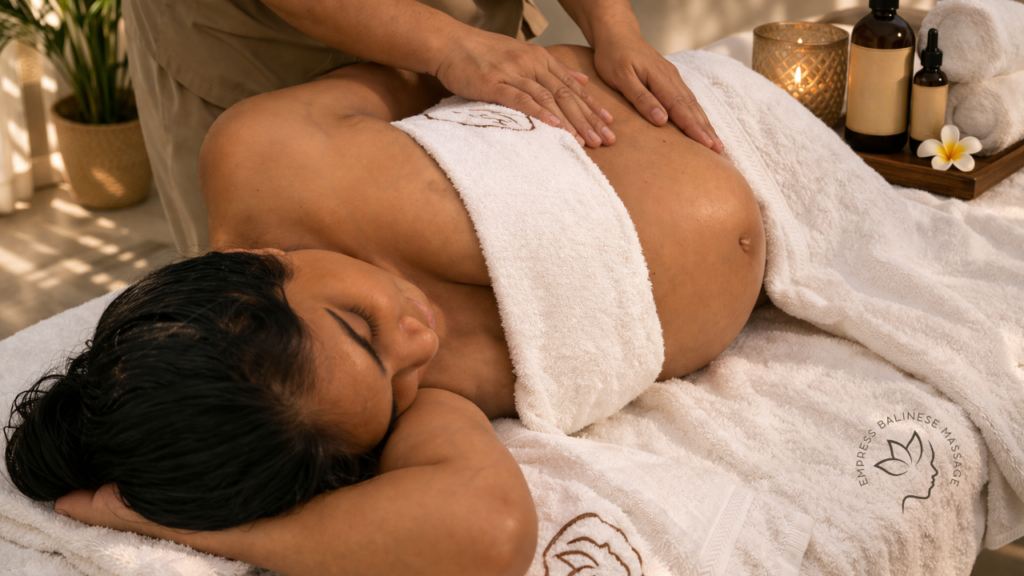
Before a pregnancy massage Dubai appointment begins, the therapist should understand the client’s pregnancy stage, current comfort, health considerations and positioning needs.
At Empress Balinese Massage, the treatment does not begin the moment the therapist opens the massage oil. The preparation starts during booking and continues through the consultation, room setup and supported positioning.
These steps help the therapist decide whether the session can proceed safely, which areas need attention and how the massage should be adapted.
A prenatal massage should never feel like a standard massage with a pregnancy pillow added at the last minute. The experience should be planned around the pregnant client from the beginning.
The Preparation Starts During Booking
The first stage happens before the therapist arrives.
When booking a pregnancy massage with Empress, the client may be asked how many weeks pregnant she is. Empress accepts prenatal massage bookings from 20 weeks onward as part of its safety-led service policy.
The booking team may also ask whether:
- The pregnancy is considered high risk
- The client is expecting more than one baby
- There has been recent bleeding
- There is severe or unusual swelling
- A doctor or midwife is monitoring a health concern
- The client has been advised to avoid massage
- There are any mobility or positioning difficulties
- The appointment will take place at home or in a hotel
These questions are not designed to make the booking process complicated. They help the team understand whether the appointment can be confirmed normally or whether additional medical guidance may be appropriate.
The therapist does not diagnose conditions. Empress also does not replace advice from the client’s maternity healthcare provider.
Why Is the Pregnancy Week Confirmed?
The client’s pregnancy week affects how the treatment is prepared.
Empress begins prenatal massage from 20 weeks onward. However, reaching 20 weeks does not automatically mean that every client is suitable for massage.
A client at 21 weeks may have very different positioning and comfort needs from someone in the final weeks of pregnancy.
The pregnancy stage may affect:
- How much pillow support is needed
- How easily the client can turn
- How long she is comfortable in one position
- Which areas feel sensitive
- The preferred session duration
- How frequently breaks or position changes are needed
Knowing the correct pregnancy week gives the therapist useful context before the massage begins.
What Happens When the Therapist Arrives?
For a home service massage Dubai appointment, the Empress therapist usually arrives approximately 10 to 15 minutes early.
This allows enough time to enter the property, identify a suitable treatment space, bring in the equipment and complete the consultation without rushing.
The therapist arrives with the professional equipment needed for the appointment, which may include:
- A massage table
- Freshly laundered linens
- Clean towels
- Suitable massage oil
- A Doomoo pregnancy pillow
- Additional support pillows
- Other pregnancy-appropriate setup items
Professional presentation also forms part of the experience. The therapist should arrive in a clean uniform, communicate respectfully and set up without creating unnecessary disruption in the client’s home.
Luxury at home is not only about appearance. It is also reflected in preparation, punctuality, hygiene and calm communication.
Choosing the Right Space
Before setting up the massage table, the therapist may help the client choose a suitable area in the home or hotel room.
The space should ideally be:
- Private
- Quiet
- Comfortable in temperature
- Large enough for the massage table
- Easy for the client to access
- Free from unnecessary obstacles
The therapist needs enough room to move safely around the table without asking the client to repeatedly stand up or rearrange furniture.
A bedroom, living area or quiet room may all be suitable, depending on the size and layout of the property.
In a hotel, the client should confirm visitor and external service-provider policies before the appointment. This can help prevent access delays when the therapist arrives.
The Prenatal Consultation
Once the equipment is inside and the treatment area has been chosen, the therapist completes a prenatal consultation.
This is one of the most important stages before the massage.
The therapist may ask about:
- Current areas of discomfort
- Lower-back, hip, shoulder or leg sensitivity
- Preferred pressure
- Positions that currently feel uncomfortable
- Recent changes in the pregnancy
- Advice from a doctor or midwife
- Swelling or circulation concerns
- Any previous experience with prenatal massage
- Fragrance or oil sensitivities
The client should answer honestly, even if she is concerned that mentioning a symptom may lead to the appointment being postponed.
A massage should never continue simply because the therapist has already arrived. If there is a concern that requires medical assessment, the responsible decision may be to delay treatment.
Symptoms That Should Be Shared
Pregnancy can involve many physical changes, but new, severe or unusual symptoms should not be ignored.
Before the session, the client should tell the therapist about concerns such as:
- Active or unexplained bleeding
- Severe or unusual swelling
- Pain, warmth or redness affecting one leg
- High blood pressure
- Preeclampsia
- Placenta previa
- Blood-clotting conditions
- Significant varicose veins
- Severe pain
- A high-risk pregnancy
- A recent medical assessment or hospital visit
These details help the therapist recognise when the treatment may require adjustment, postponement or approval from a maternity healthcare provider.
Prenatal massage supports wellness and comfort. It should never be used instead of medical assessment.
How Does the Therapist Assess Comfort?
The therapist learns a great deal before the client lies on the table.
She may notice how the client walks into the room, lowers herself into a chair or changes direction. She may observe whether the client protects one side of her lower back, places more weight on one leg or finds it difficult to rotate her shoulders.
These observations are not used to diagnose a condition.
They help the therapist understand how the body is currently moving and where more support may be needed.
For example, the client may mention shoulder tension, but the therapist may also notice that she is holding her breath when turning or using one arm to support herself when sitting down.
This information can influence the pillow arrangement, massage sequence and pressure used during the session.
Discussing Pressure Before the Massage
Pressure preferences should always be discussed before treatment.
Some clients prefer gentle, flowing movements. Others may want more focused work around the shoulders, hips or back.
However, pregnancy massage is not based on selecting one pressure level for the entire body.
The therapist may explain that:
- Pressure will vary by area
- Certain areas require additional care
- Firm pressure should never feel sharp or overwhelming
- The client can request changes at any time
- Deeper pressure does not automatically produce a better result
The therapist will also continue observing the client during the massage.
If the client starts tightening her muscles, holding her breath or moving away from the therapist’s hands, the pressure may need to be reduced even if she has not said anything.
How Is the Massage Table Prepared?
The table is covered with clean linens and arranged according to the client’s pregnancy stage and body shape.
Empress performs prenatal massage predominantly in a supported side-lying position.
A Doomoo pregnancy pillow and additional pillows may be placed:
- Beneath or around the abdomen
- Between the knees
- Beneath the upper leg
- Behind the back
- Under the head and neck
- Around the shoulders or arms
The positioning is not identical for every pregnant client.
The therapist may ask the client to lie down slowly and then adjust each pillow one at a time. The aim is to reduce strain and create a position the client can maintain comfortably.
If the client feels pressure, numbness, dizziness or difficulty breathing, the setup should be changed immediately.
What Should the Client Wear?
The client can wear comfortable clothing before the appointment.
The therapist will explain how to prepare for the massage and which clothing may need to be removed depending on the areas included in the treatment.
Professional draping should be used throughout the session. Only the area being worked on should be uncovered, while the rest of the body remains covered.
The client should always feel respected, secure and in control of the treatment.
Any personal preference regarding coverage, room temperature or positioning should be discussed before the massage begins.
Are Oils and Scents Discussed?
Yes. Pregnancy can increase sensitivity to fragrance, and scents that were previously enjoyable may become uncomfortable.
Before using a scented oil, the therapist may ask about:
- Fragrance sensitivity
- Nausea triggered by smells
- Skin sensitivity
- Allergies
- Personal preferences
- Advice provided by a healthcare professional
A neutral or suitable alternative may be used where appropriate.
The atmosphere should support calm rather than overwhelm the client’s senses.
What Is Not Included in a Prenatal Massage?
Empress does not directly massage the abdomen during prenatal sessions.
Hot stone massage is also avoided throughout pregnancy.
Before the treatment begins, the therapist may explain which areas can be included and how the massage will be structured.
The focus may be placed on appropriate areas such as the:
- Back
- Shoulders
- Arms
- Hips
- Legs
- Feet
The final plan depends on the client’s pregnancy stage, comfort and suitability.
Can the Treatment Plan Change?
Yes. The plan discussed before the massage is not fixed.
A client may initially feel comfortable in one position but need additional support after several minutes. An area she expected to feel sensitive may be comfortable, while another may require lighter pressure.
The therapist may:
- Reposition the pillows
- Change the pressure
- Spend more time on one area
- Shorten work on another area
- Help the client turn carefully
- Pause the session
- Adapt the treatment duration
Personalisation does not stop once the massage begins. It continues throughout the appointment.
Why Does This Preparation Matter?
The preparation stage helps create a treatment that feels calm, respectful and relevant to the client.
It gives the therapist time to understand the person rather than immediately beginning a standard massage sequence.
It also gives the client an opportunity to ask questions and explain what she needs.
For Empress, the moments before treatment reflect the same standards as the massage itself. Clear communication, clean equipment, thoughtful positioning and careful consultation are all part of the service.
A professional pregnancy massage should begin with reassurance, not uncertainty.
Frequently Asked Questions
What information should I share when booking a pregnancy massage?
Tell the booking team how many weeks pregnant you are and whether the pregnancy is considered high risk. You should also mention bleeding, unusual swelling, blood pressure concerns, multiple pregnancy or any advice from your doctor or midwife. This helps the team determine whether the appointment can proceed normally or whether medical approval may be appropriate.
Does Empress offer pregnancy massage before 20 weeks?
No. Empress accepts pregnancy massage bookings from 20 weeks onward. This is a safety-led service policy that creates a consistent starting point for prenatal consultation, supported positioning and treatment adaptation. It does not mean that massage before 20 weeks is universally harmful.
Do I need to prepare a massage table at home?
No. The Empress therapist brings a professional massage table, freshly laundered linens, towels, suitable massage oil and pregnancy support equipment. The client only needs to provide a private, comfortable area with enough space for the therapist to set up and move safely around the table.
How much space is needed for a home massage?
The therapist needs enough room to fully open the massage table and walk around it safely. A bedroom, living room or another quiet area may work well. The space should be clear of obstacles and easy for the pregnant client to access without unnecessary stairs or difficult movement where possible.
What happens during the consultation?
The therapist asks about the pregnancy stage, areas of discomfort, pressure preferences, health concerns, comfortable positions and any advice from a doctor or midwife. She may also discuss oils, fragrance sensitivities and the planned treatment areas. This consultation helps shape the session and identify whether additional caution is needed.
Do I need a doctor’s approval?
Not every uncomplicated pregnancy requires medical approval. However, Empress may recommend speaking with a maternity healthcare provider if the pregnancy is high risk or there is bleeding, severe swelling, high blood pressure, placenta previa, a blood-clotting concern or another medical condition.
Can I ask for firm pressure?
You can discuss your preferred pressure with the therapist, but the intensity will be adapted by body area and pregnancy stage. Firm pressure should never feel sharp, uncontrolled or painful. The therapist may reduce pressure if she notices muscle guarding, breath holding or other signs of discomfort.
What position will I be in?
Empress predominantly uses a supported side-lying position. A Doomoo pregnancy pillow and additional support pillows may be placed around the abdomen, back, head and legs. The arrangement is personalised and can be changed during the session whenever the client needs more support.
Can I have a pregnancy massage in a hotel?
Hotel appointments may be available subject to therapist availability and the hotel’s visitor policies. Clients should confirm access rules before the appointment. The therapist brings the equipment needed for the treatment and sets up neatly inside the room where permitted.
What happens if I feel unwell before the appointment?
Tell the Empress team as soon as possible. New bleeding, severe swelling, chest pain, breathlessness, significant pain or other concerning symptoms require medical attention rather than massage. It is safer to postpone a wellness appointment than to continue when medical assessment may be needed.
Prepare for a Calm Pregnancy Massage at Home
A pregnancy massage with Empress begins with careful preparation, honest communication and a treatment plan shaped around your comfort.
From 20 weeks onward, you can arrange a personalised prenatal massage in your Dubai home or hotel, with professional equipment, supported positioning and pregnancy-appropriate care.
Speak with the Empress team before booking if you have recent symptoms, a high-risk pregnancy or questions about whether massage is suitable for you.
