
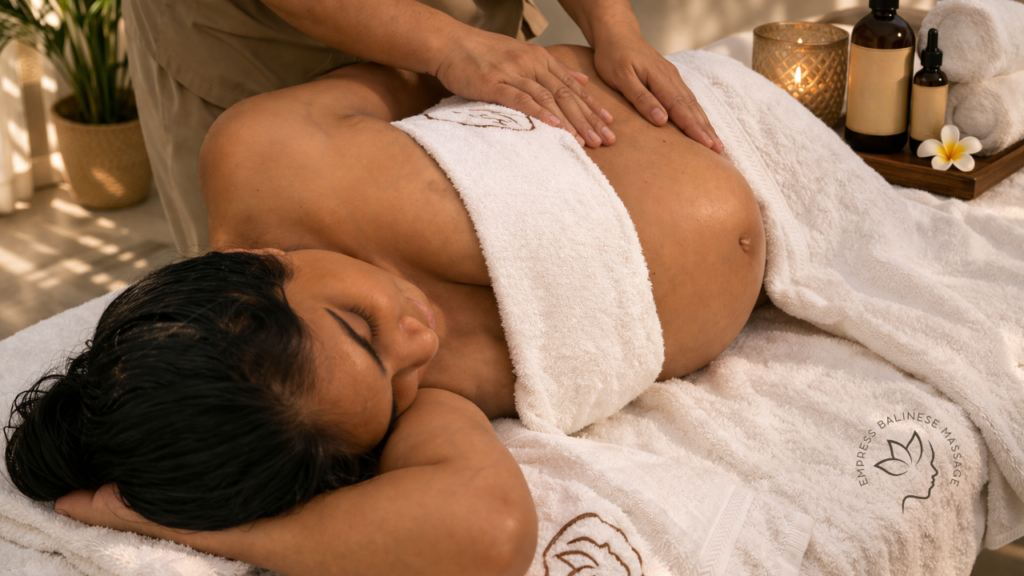
No two pregnancy massage Dubai sessions should feel exactly the same.
Pregnancy changes continuously. An area that felt comfortable last week may feel sensitive today. A position that once felt supportive may need additional pillows. A client who previously enjoyed focused pressure may prefer gentler movements during her next appointment.
At Empress Balinese Massage, every prenatal treatment begins with a fresh consultation. The therapist does not simply repeat the previous massage or follow one fixed pregnancy routine.
Pressure, positioning, treatment areas and session pace are adapted according to the client’s pregnancy stage, current symptoms and comfort on that particular day.
Pregnancy Does Not Feel the Same Every Week
Pregnancy is not one unchanging physical experience.
A client at 21 weeks may move easily and need only light support around the abdomen. Later in pregnancy, the same client may require more time to turn, extra support beneath the upper leg and a shorter period in each position.
Changes may affect:
- The lower back
- Hips and pelvis
- Shoulders and neck
- Legs and feet
- Energy levels
- Sensitivity to touch
- Breathing comfort
- Ability to remain in one position
- Fragrance preferences
This is why a prenatal therapist should never assume that the treatment used during the last appointment will still be appropriate.
The therapist begins again by asking how the client feels today.
The Consultation Changes Every Session
A returning client may think the therapist already knows everything needed for the appointment.
However, even familiar clients need a new consultation before each massage.
The therapist may ask:
- How many weeks pregnant are you now?
- Has anything changed since the last session?
- Are there any new areas of discomfort?
- Has swelling increased?
- Are you sleeping differently?
- Has your doctor or midwife given new advice?
- Which positions currently feel comfortable?
- Is the pregnancy still progressing without additional concerns?
- How did your body feel after the previous massage?
These questions help the therapist understand what has changed.
A client may have enjoyed firm shoulder work previously but now feel more sensitive. Another may have developed unusual swelling or a medical concern that means massage should be postponed.
Personalisation begins with listening rather than assuming.
Positioning Is Never Exactly the Same
Empress performs prenatal massage predominantly in a supported side-lying position.
A Doomoo pregnancy pillow and additional pillows may be arranged around the abdomen, back, head, hips and legs. However, the setup is not copied from one client to another.
It may even differ between two appointments for the same client.
Pillow support depends on:
- The size and position of the abdomen
- Hip or pelvic sensitivity
- Lower-back comfort
- Shoulder position
- Breathing
- Leg heaviness or swelling
- How long the client can remain on one side
The therapist may place additional support behind the back during one session and focus more on supporting the upper leg during another.
A position can look correct but still feel uncomfortable. The therapist therefore relies on the client’s feedback and physical response rather than following a standard diagram.
Pressure May Feel Different From One Day to the Next
Massage pressure is not a permanent preference.
A client may usually describe herself as someone who enjoys firm massage, but pregnancy can change sensitivity. Tired muscles, swelling, poor sleep or a recent increase in discomfort may affect how pressure feels.
During a personalised prenatal massage Dubai session, the therapist may use different pressure levels across the body.
For example:
- The shoulders may tolerate slower, focused pressure.
- The lower back may require broader and gentler movements.
- The legs may need additional caution.
- The feet may feel more sensitive when swollen.
- One hip may need lighter pressure than the other.
The therapist watches how the client breathes and whether her muscles soften or tighten.
If she begins holding her breath, moving away from the pressure or tensing her hands and shoulders, the intensity should be adjusted.
The aim is not to repeat the exact pressure used last time. It is to find what feels appropriate now.
The Area That Needs Attention Can Change
Pregnancy massage is not always booked for the same reason.
One week, the client may want attention around her shoulders after working long hours. During another appointment, her hips or lower back may feel more tired because she has changed how she walks or sleeps.
A therapist may also notice areas the client has not mentioned.
Before beginning, she may observe:
- One shoulder resting higher
- More weight being placed on one leg
- The client protecting her lower back
- Difficulty turning towards one side
- Muscle guarding around the hips
- Shallow breathing when changing position
These observations do not provide a medical diagnosis.
They help the therapist decide where support, gentle work or additional communication may be needed.
The painful area is not always the only area included. The therapist considers the body as connected while remaining within professional wellness boundaries.
Some Sessions Need to Be Slower
The pace of prenatal massage should also change when necessary.
A client may feel energetic and comfortable during one appointment but need more time and reassurance during another.
The therapist may slow the session if the client:
- Needs help changing sides
- Becomes uncomfortable quickly
- Requires frequent pillow adjustments
- Feels tired or physically sensitive
- Needs breaks
- Has difficulty settling
- Feels overwhelmed by strong scents or stimulation
A slower massage does not mean less care is being provided.
Sometimes the most personalised decision is to do fewer areas with greater attention rather than rushing to complete a full routine.
Later Pregnancy May Require Shorter Treatment
As the pregnancy progresses, remaining in one position may become more tiring.
A client in the final weeks may prefer a shorter appointment or more frequent changes in position. The therapist may focus on the areas that matter most instead of trying to include every suitable body area.
The session may prioritise:
- Shoulder comfort
- Lower-back relaxation
- Hip support
- Gentle leg or foot work
- Calm breathing
- Comfortable rest
The treatment should not continue for a predetermined duration if the client is struggling to remain comfortable.
Pregnancy massage adapts to the client, not the clock.
Emotional Needs Can Also Change
Some clients book prenatal massage mainly because their body feels tired. Others want a quiet period away from work, household responsibilities or constant pregnancy planning.
A client may feel talkative during one massage and prefer silence during the next.
The therapist should respect these differences.
Personalisation may include:
- Keeping conversation minimal
- Explaining each position change
- Checking pressure more frequently
- Allowing extra time to settle
- Avoiding strong fragrance
- Maintaining a quiet room
- Packing equipment calmly after treatment
The emotional atmosphere forms part of the service.
A premium home massage should make the client feel listened to rather than processed through a standard appointment.
Why the Therapist May Change the Original Plan
The treatment plan discussed before the massage is not a promise that every area will be completed exactly as expected.
Once the session begins, the therapist may notice that:
- A particular area is more sensitive than expected.
- The client cannot remain on one side comfortably.
- Pressure that sounded suitable during consultation feels too strong.
- Swelling or tenderness requires greater caution.
- The client becomes tired.
- An area should be avoided.
- New symptoms need to be discussed.
The therapist may change the massage sequence, reduce the pressure or stop work on a particular area.
Adapting the plan is not inconsistency. It is a sign that the therapist is responding to the client.
When the Difference Is a Safety Decision
Sometimes a pregnancy massage feels different because the safest decision is to reduce, postpone or avoid treatment.
Massage may not proceed when there is:
- Active or unexplained bleeding
- Suspected blood clot
- Severe or unusual swelling
- Uncontrolled high blood pressure
- Preeclampsia
- Placenta previa
- A high-risk pregnancy requiring approval
- A new or unexplained symptom
- Medical advice to avoid massage
The therapist does not diagnose pregnancy conditions.
Her responsibility is to recognise when a wellness appointment may no longer be appropriate and encourage the client to seek guidance from her maternity healthcare provider.
Safety should always take priority over completing a booking.
Why Home Pregnancy Massage Supports Personalisation
A home appointment allows the treatment to take place in an environment the client already knows.
For an Empress home massage, the therapist arrives approximately 10 to 15 minutes early with:
- A professional massage table
- Freshly laundered linens
- Clean towels
- Suitable massage oil
- A Doomoo pregnancy pillow
- Additional support pillows
The client can choose a quiet space, move at her own pace and communicate what she needs without travelling to a spa.
After the massage, the therapist packs the equipment neatly and quietly. The client can remain at home rather than immediately dealing with Dubai traffic, parking or transport.
This helps the experience stay calm after the treatment ends.
What Consistency Means at Empress
Personalisation does not mean the service should feel unpredictable or unprofessional.
The massage itself may change, but the service standards should remain consistent.
Clients should still expect:
- Clear booking communication
- Punctual arrival
- Professional presentation
- Clean equipment
- Fresh linens and towels
- Respectful consultation
- Appropriate draping
- Ongoing comfort checks
- Quiet and organised packing
- Professional boundaries
Luxury is not created by repeating the same treatment.
It is created by delivering the same level of care while adapting the massage to the individual client.
Frequently Asked Questions
Why did my second pregnancy massage feel different from my first?
Your pregnancy stage, sensitivity, symptoms and positioning needs may have changed. The therapist may also have noticed that different areas required attention. A prenatal massage should be reassessed at every appointment rather than repeated automatically.
Will I receive the same therapist each time?
Clients may request the same therapist, subject to availability. Even when the same therapist returns, she should complete a fresh consultation and adapt the treatment according to how you feel that day.
Can I request the same pressure as my previous massage?
Yes, but the therapist will still assess whether that pressure remains comfortable and suitable. Pregnancy can change sensitivity between appointments, and the same intensity may feel different in another body area or at a later pregnancy stage.
Does every prenatal massage use side-lying positioning?
Empress performs prenatal massage predominantly in a supported side-lying position. Pillow placement and time spent on each side are personalised according to pregnancy stage, body shape and comfort.
Why might the therapist spend more time on one area?
The therapist may notice that one area needs additional attention or that another area is too sensitive to work on for long. The treatment is shaped around what feels most useful and appropriate rather than dividing time equally across the body.
Can the treatment become shorter later in pregnancy?
Yes. During the final weeks, a shorter session may feel more comfortable. The therapist may also allow more time for position changes or focus on selected areas rather than completing a longer routine.
Is the abdomen included in pregnancy massage?
No. Empress does not directly massage the abdomen during prenatal sessions. The therapist focuses on appropriate areas such as the back, shoulders, arms, hips, legs and feet.
Can I request deep pressure during pregnancy?
You may discuss your preference, but pressure must be adapted by body area and pregnancy stage. Prenatal massage should not become a standard deep tissue routine, and painful pressure is not required for the session to feel effective.
Does Empress offer pregnancy massage before 20 weeks?
No. Empress accepts prenatal massage bookings from 20 weeks onward. Reaching 20 weeks does not automatically make massage suitable if there are medical concerns or unusual symptoms.
When should I speak with my doctor before booking?
Speak with your doctor or midwife if you have a high-risk pregnancy, bleeding, severe or unusual swelling, high blood pressure, placenta-related concerns, suspected blood clots or any new symptom requiring assessment.
Book a Pregnancy Massage Shaped Around You
From 20 weeks onward, Empress offers personalised pregnancy massage in your Dubai home or hotel.
Every appointment begins with a fresh consultation because your body, comfort and priorities may have changed since your last session.
The therapist adapts the pressure, pillow support, treatment areas and pace so the massage responds to how you feel today, rather than repeating a fixed prenatal routine.
