
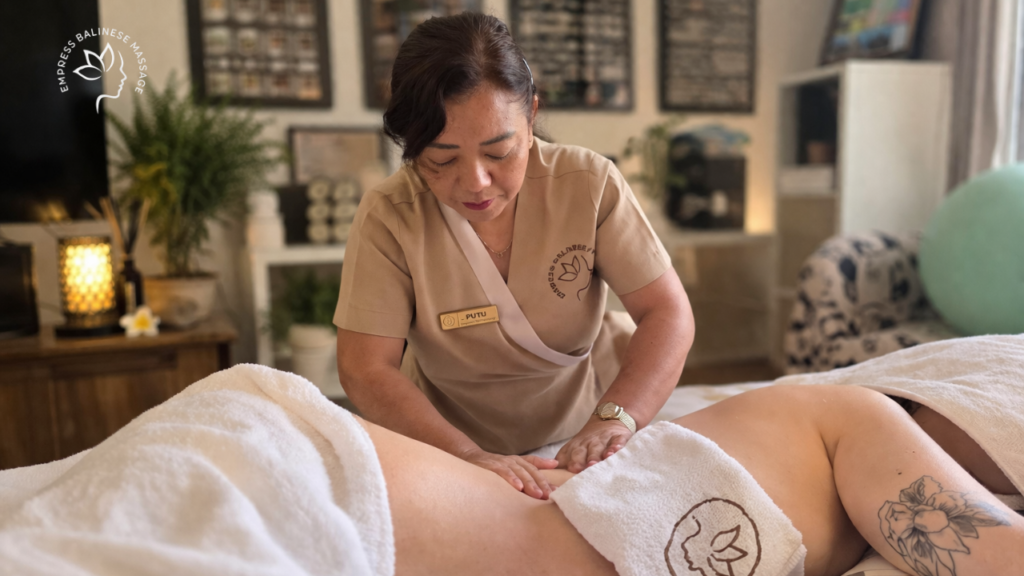
The most meaningful postnatal massage benefits are often simple: time to rest, support for tired muscles and a treatment shaped around how the mother is recovering after birth.
Feeding, carrying a baby, interrupted sleep and spending hours in repeated positions can leave the shoulders, back, arms and hands feeling tired. A personalised massage may help a suitable client feel calmer and more physically comfortable.
However, postnatal massage does not speed up internal healing, remove body fat, treat postpartum complications or replace care from a doctor, midwife or physiotherapist.
Every new mother recovers differently. The type of birth, healing progress, current symptoms and medical guidance should therefore be considered before treatment begins.
A Quiet Pause During a Demanding Stage
The postnatal period can feel physically and emotionally demanding.
Much of the day may revolve around feeding, settling the baby, changing nappies and trying to rest between interruptions. Even when family support is available, mothers may find that very little time is focused entirely on their comfort.
A home postnatal massage creates a protected pause.
The therapist prepares the professional treatment space, helps the mother find a supported position and adapts the session around her energy level. The mother does not need to travel, wait in a reception area or organise someone to accompany her to a spa.
Massage cannot replace sleep or practical support, but it can create a period in which the mother is not expected to do anything for anyone else.
Support for Tired Shoulders and Upper Back
Feeding and holding a baby can involve remaining in one position for extended periods.
A mother may lean forward, round her shoulders or repeatedly look down while feeding. She may also carry the baby mainly on one side because it feels easier.
Over time, the shoulders, neck and upper back may begin to feel tired.
During a postnatal massage, the therapist may observe:
- One shoulder resting higher
- The upper back appearing guarded
- Tightness when the mother turns her neck
- One arm being used more than the other
- Shallow breathing when pressure increases
- Difficulty allowing the shoulders to relax
These observations are not used to diagnose the cause of pain.
They help the therapist personalise the pressure and decide which suitable areas may need more attention.
Comfort for the Lower Back and Hips
Pregnancy and birth can affect how comfortable the lower back and hips feel, but postpartum pain should not automatically be treated as ordinary muscular tension.
Before beginning, the therapist may ask:
- When did the discomfort start?
- Is it improving or becoming worse?
- Does it affect movement?
- Was the birth vaginal or caesarean?
- Is there numbness, weakness or tingling?
- Has the pain been assessed?
- Which positions currently feel comfortable?
If massage is appropriate, the therapist may use gentle or controlled pressure around suitable muscular areas while avoiding wounds and sensitive tissues.
Persistent pain, weakness or symptoms affecting normal movement should be discussed with a maternity healthcare provider or qualified physiotherapist.
Relief from Repetitive Hand and Arm Use
New mothers frequently use their hands, wrists and arms for lifting, feeding, supporting and carrying.
These repeated movements may leave the forearms, hands or shoulders feeling tired.
A personalised postnatal massage may include suitable work around the:
- Arms
- Hands
- Shoulders
- Upper back
- Neck
The therapist should not diagnose wrist, joint or nerve conditions.
Pain that is severe, worsening or accompanied by numbness, weakness or loss of grip requires appropriate professional assessment rather than increasingly strong massage.
Gentle Care for Tired Feet and Legs
Some mothers experience mild heaviness or puffiness after birth.
When massage is suitable, light and controlled techniques may help the feet and legs feel more comfortable. Strong pressure is not automatically appropriate, especially during the early postpartum weeks.
The risk of a venous blood clot is highest immediately after birth and remains increased during the first six weeks, although blood clots are still uncommon.
Massage should not be performed over a leg that is unusually swollen, painful, hot or red, particularly when symptoms mainly affect one side.
Sudden breathlessness, chest pain, coughing blood or collapse requires emergency medical care rather than massage.
A Treatment Adapted Around Postnatal Sensitivity
A mother who enjoyed firm massage before pregnancy may feel differently after birth.
Interrupted sleep, healing tissues, breastfeeding, surgery and general physical fatigue can all influence how touch and pressure feel.
The therapist may begin gently and adjust the intensity according to:
- The body area
- Current sensitivity
- Type of birth
- Healing progress
- Positioning
- The client’s pressure preference
- Verbal feedback
- Breathing and muscle response
Pressure should be reduced if the mother holds her breath, protects the abdomen, pulls away from touch or develops sharp pain.
The first postnatal session does not need to recreate the massage she enjoyed before pregnancy. It should respond to the body she has today.
Supportive Positioning After Birth
Comfortable positioning is an important part of postnatal massage.
Lying face down may not feel suitable for a breastfeeding mother with breast fullness or tenderness. It may also feel uncomfortable after abdominal surgery.
Depending on the mother’s recovery, the therapist may use:
- Supported side-lying
- A gently reclined position
- Pillows behind the back
- Support beneath the knees
- Additional cushioning for the arms
- Shorter periods in each position
The client should be able to request adjustments at any point.
If a position pulls around a caesarean incision, increases pelvic discomfort or makes breathing difficult, the setup must change.
A Calmer Home Experience
Leaving home with a newborn can require considerable planning.
A spa visit may involve organising feeds, packing a baby bag, arranging transport and managing the return journey. A home appointment removes many of these steps.
For an Empress home treatment, the therapist brings:
- A professional massage table
- Freshly laundered linens
- Clean towels
- Suitable massage oil
- Support pillows where required
The therapist usually arrives approximately 10 to 15 minutes early to complete the consultation and prepare the space without rushing.
The appointment may need to pause briefly for feeding or baby care. A supportive postnatal service should recognise that the session may not follow a perfectly uninterrupted schedule.
An Opportunity to Notice What Your Body Needs
Postnatal massage is not only about pressure.
A well-managed session may help the mother recognise that she needs more support while feeding, a different resting position or professional guidance for pain she has been trying to ignore.
The therapist may notice that:
- One side feels more sensitive
- The mother protects her abdomen while turning
- Her shoulders remain lifted
- She cannot remain in one position comfortably
- A symptom needs medical assessment
- A shorter treatment would be more appropriate
Massage therapists do not diagnose postpartum conditions. Responsible care includes recognising professional limits and referring the mother back to her healthcare provider when necessary.
Can Postnatal Massage Improve Sleep?
Massage may help some mothers feel relaxed, but it cannot guarantee better or uninterrupted sleep.
A newborn’s feeding pattern, physical discomfort, anxiety and many other factors may affect rest.
The value of massage may be the opportunity to mentally slow down and release some ordinary muscular tension before returning to daily responsibilities.
Persistent inability to sleep, ongoing low mood, hopelessness, overwhelming anxiety or difficulty functioning should be discussed with a qualified healthcare professional.
Postnatal emotional wellbeing deserves the same attention as physical recovery. WHO describes the first six weeks after birth as a critical period for the mother’s physical and mental recovery and wellbeing.
Does Postnatal Massage Help the Body “Bounce Back”?
Postnatal massage should never place additional pressure on a new mother to restore her previous body quickly.
It does not:
- Melt body fat
- Flatten the abdomen
- Close separated abdominal muscles
- Remove toxins
- Guarantee reduced swelling
- Speed up internal healing
- Replace postnatal physiotherapy
- Produce permanent body contouring
Recovery after birth is individual and may continue beyond a single six-week appointment. Postpartum care should be an ongoing process based on each woman’s physical, emotional and practical needs.
Massage should support comfort during recovery, not create another unrealistic target.
When Should Postnatal Massage Be Postponed?
Massage should be postponed when the mother has symptoms that require medical assessment.
These may include:
- Heavy or increasing bleeding
- Fever or chills
- Severe abdominal or pelvic pain
- A red, hot or opening caesarean wound
- Foul-smelling discharge
- Severe headache or vision changes
- Sudden or extreme swelling
- Pain, redness or swelling affecting one leg
- Chest pain or breathing difficulty
- Dizziness or fainting
- Medical advice to avoid massage
Normal postpartum recovery may include bleeding, stitches and other physical changes, but new, severe or worsening symptoms should be discussed with the maternity care team.
The therapist should never continue simply because the appointment has already started.
Frequently Asked Questions
What are the main postnatal massage benefits?
Postnatal massage may offer relaxation, a quiet period of rest and comfort around tired muscles. It can be personalised for the shoulders, back, arms, hands, legs or feet when suitable. Benefits vary, and massage should not be presented as a medical treatment or a way to accelerate recovery.
How soon after birth can I book?
There is no universal waiting period. Timing depends on the type of birth, healing, current symptoms and medical advice. A mother recovering from a caesarean section, significant tearing, infection or another complication may require more time and healthcare approval.
Can I receive massage after a caesarean birth?
Massage away from the incision may be considered when positioning feels comfortable and the maternity healthcare provider has no concerns. The therapist should not massage directly over an unhealed caesarean wound or apply pressure that pulls around the abdomen.
Can postnatal massage help shoulder pain from feeding?
Massage may support ordinary muscular comfort around tired shoulders, arms and the upper back. It does not diagnose the cause of pain. Persistent, severe or worsening symptoms should be assessed by a healthcare professional.
Is postnatal massage suitable while breastfeeding?
Breastfeeding does not automatically prevent massage, but breast tenderness may make lying face down uncomfortable. Supported side-lying or a reclined position may be used instead. Fever, breast redness or suspected mastitis requires medical guidance.
Can I request deep pressure?
You may discuss your preferred pressure, but the therapist should begin carefully and adapt intensity by body area. Your sensitivity may have changed after birth. Deep pressure should never be applied over wounds, swollen areas or unexplained pain.
Does postnatal massage reduce body weight?
No. Postnatal massage does not remove body fat or provide permanent weight loss. Any temporary change in puffiness should not be confused with fat loss or body transformation.
Can massage reduce postpartum swelling?
Gentle massage may help some mothers feel more comfortable, but swelling reduction cannot be guaranteed. Sudden, painful, hot, red or one-sided swelling needs medical assessment rather than massage.
Can I have postnatal massage at home?
Yes, subject to suitability and therapist availability. Empress brings the professional massage table, fresh linens, towels, suitable oil and support pillows to the client’s Dubai home.
When should I contact my doctor instead of booking massage?
Seek medical guidance for heavy bleeding, fever, severe pain, an infected wound, severe headache, vision changes, one-sided leg swelling, chest pain or breathing difficulty. A wellness appointment should never delay necessary postpartum care.
Give the Mother Care, Not Another Expectation
Postnatal massage should not be about returning to an old routine as quickly as possible. It can simply be a moment when a new mother is supported, listened to and allowed to rest.
When your healthcare provider is comfortable with your recovery, share your type of birth, current sensitivities and preferred position with the Empress team. The therapist can then prepare a home treatment that meets you where you are, rather than where anyone thinks you should be.
