
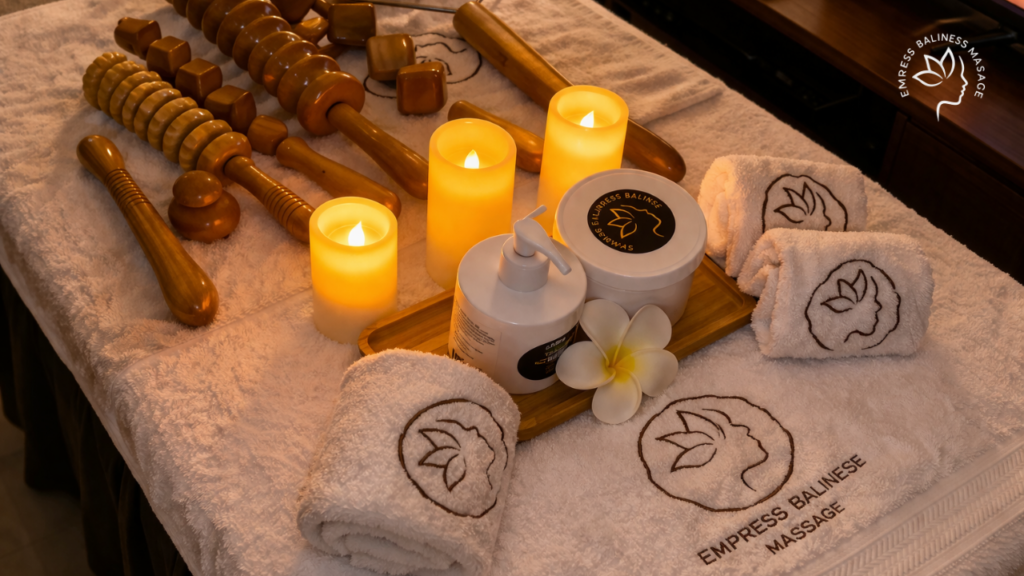
Madero therapy is a body massage technique that uses specially shaped wooden tools alongside manual massage movements. During a session, the therapist applies rhythmic and controlled techniques across suitable areas, adjusting the intensity according to the client’s comfort and treatment goals.
It is often booked by clients interested in body-contouring wellness, massage with a more stimulating rhythm or a treatment that feels different from a traditional hands-only massage.
Madero therapy should not be promoted as a guaranteed weight-loss treatment or a permanent solution for cellulite. It may form part of a wider wellness routine, but results and experiences differ between clients.
With a professional home service massage Dubai appointment, the therapist brings the treatment equipment directly to your villa, apartment or hotel room and prepares the session around your body, sensitivity and preferences.
What Is Madero Therapy?
The word “madero” comes from the Spanish word for wood.
Madero therapy, also known as maderotherapy or wood therapy, uses specially designed wooden tools to perform rhythmic massage techniques across selected body areas.
The tools may vary in shape and purpose. Some are designed to roll across broader areas, while others allow the therapist to work more precisely around suitable sections of the body.
A session may combine:
- Manual massage
- Rhythmic wooden-tool movements
- Rolling techniques
- Controlled pressure
- Focused work around selected areas
- Massage oil to reduce friction
- Intensity adjusted throughout the session
The tools should never be used carelessly or with uncontrolled force.
A professional treatment depends on the therapist’s technique, pressure control and ability to recognise when an area is too sensitive to continue.
What Happens Before the Session Begins?
Every madero therapy appointment should begin with a consultation.
The therapist needs to understand why you are booking, which areas you would like included and whether there are any medical or physical concerns that could affect the treatment.
She may ask about:
- Your main treatment goals
- Areas you want the therapist to focus on
- Pressure sensitivity
- Bruising easily
- Varicose veins
- Recent surgery or cosmetic procedures
- Skin irritation
- Unexplained swelling
- Pregnancy
- Medication or medical advice
- Previous experience with madero therapy
This consultation is important because madero therapy can feel more stimulating than a gentle relaxation massage.
The therapist should never assume that strong pressure is suitable simply because the client requested a body-contouring treatment.
Which Areas Can Be Included?
Madero therapy is commonly used across suitable areas such as the:
- Thighs
- Hips
- Buttocks
- Abdomen, where appropriate
- Arms
- Back
- Waist area
The areas included depend on the service booked, the client’s comfort and any contraindications.
Not every part of the body should receive the same tool, pressure or amount of treatment time.
The therapist may spend longer around one area and work more gently around another. She may also avoid areas with bruising, painful veins, broken skin, recent procedures or unexplained tenderness.
A personalised session is more important than completing a fixed sequence.
How Is the Treatment Space Prepared?
For a home appointment, the Empress therapist brings the professional setup to your Dubai home or hotel.
This may include:
- A professional massage table
- Freshly laundered linens
- Clean towels
- Suitable massage oil
- Sanitised wooden massage tools
- Support cushions where required
The therapist generally arrives approximately 10 to 15 minutes early so she can prepare the room, complete the consultation and organise the tools without rushing.
You only need to provide a clean, private area with enough space for the massage table and for the therapist to move around it safely.
The room does not need to look like a spa. A comfortable temperature, good access and minimal interruptions are enough.
How Does the Session Begin?
The therapist may begin with manual massage rather than immediately applying the wooden tools.
This allows her to:
- Introduce contact gradually
- Apply the massage oil
- Assess sensitivity
- Observe how the tissues respond
- Prepare the selected area
- Confirm that the pressure feels comfortable
Beginning manually can also help the client understand the treatment pace before the more rhythmic techniques start.
The therapist may then introduce one wooden tool at a time rather than using every tool during every appointment.
What Do the Wooden Tools Feel Like?
The sensation depends on the tool, technique and pressure.
Some movements may feel broad and rolling. Others may feel more focused or stimulating. The therapist may repeat rhythmic movements across one area before changing direction or selecting another tool.
A session may feel:
- Rhythmic
- Energising
- Firm
- Repetitive in a controlled way
- More stimulating than relaxation massage
- Different across each treatment area
The sensation should remain manageable.
The client should not feel that the therapist is scraping, aggressively pressing or forcing the tool into the body.
Is Madero Therapy Painful?
Madero therapy may feel firm, but it should not feel sharply painful or uncontrolled.
The idea that bruising proves the treatment is working is misleading. Excessive bruising may indicate that the pressure was too strong, the area was too sensitive or the technique was unsuitable.
Tell the therapist immediately if you experience:
- Sharp pain
- Burning
- Numbness
- Tingling
- Pinching
- Sudden tenderness
- Dizziness
- Pain around a vein
- Pressure that feels impossible to tolerate
The therapist may reduce the intensity, change tools, use more manual massage or avoid the area.
Pain is not a requirement for a body massage to feel focused.
How Is the Intensity Personalised?
The therapist should not use one pressure level across the entire body.
Intensity may be adjusted according to:
- The selected area
- Skin and tissue sensitivity
- Previous massage experience
- Bruising tendency
- Varicose veins
- The shape of the wooden tool
- The client’s feedback
- How the body responds during treatment
A broad rolling tool may feel comfortable around one area but too intense around another.
The therapist also watches for non-verbal signs, such as the client holding her breath, tightening her muscles or moving away from the tool.
If the body is constantly bracing, the session is too intense to feel controlled or comfortable.
What Is the Role of Massage Oil?
Massage oil helps the tools move more smoothly across the skin.
Without enough glide, the treatment may feel uncomfortable or pull excessively on the skin.
Before applying the oil, the therapist should ask about:
- Skin allergies
- Fragrance sensitivity
- Recent skin treatments
- Rashes or irritation
- Personal scent preferences
The amount of oil may also vary depending on the tool and area being treated.
The therapist should keep the setup organised so oil does not spill or create unnecessary mess inside the client’s home.
Can Madero Therapy Remove Cellulite?
Madero therapy should not be presented as a permanent cellulite-removal treatment.
The appearance of cellulite is influenced by factors including skin structure, connective tissue, genetics and body composition. A massage may temporarily affect how the skin or tissues feel or appear, but permanent removal cannot be guaranteed.
Responsible claims should focus on:
- Rhythmic bodywork
- A stimulating massage experience
- Personalised treatment intensity
- Body-contouring wellness interest
- Relaxation and physical comfort
Avoid promises such as:
- Permanent cellulite removal
- Guaranteed inch loss
- Fat melting
- Instant body transformation
- Permanent reshaping
Clients deserve realistic information before booking.
Does Madero Therapy Help with Weight Loss?
No. Madero therapy does not directly remove body fat or replace nutrition, exercise or medical weight-management support.
A client may temporarily feel less heavy or notice a short-term change in puffiness, but this should not be confused with fat loss.
Massage cannot guarantee a lower number on the scale or permanent changes in body measurements.
The treatment is better understood as a body-focused wellness service rather than a weight-loss procedure.
When Should Madero Therapy Be Avoided?
Madero therapy may need to be postponed or adapted when there is:
- Pregnancy
- A suspected blood clot
- Painful or severe varicose veins
- Unexplained swelling
- Recent surgery
- A recent cosmetic or body procedure
- Significant bruising
- Broken or irritated skin
- Active infection
- Severe unexplained pain
- Medical advice to avoid massage
- A condition affecting bleeding or bruising
Clients who are pregnant should not book a standard madero therapy session. Pregnancy requires a separate prenatal consultation and pregnancy-appropriate massage approach.
Medical approval may also be needed after surgery or an aesthetic procedure. The treating doctor’s guidance should take priority over a massage booking.
What Happens When the Session Ends?
The therapist may finish with manual massage or slower movements to bring the treatment to a calmer close.
She then gives the client time to sit up gradually before packing the tools, linens and massage table.
The professional equipment should be removed neatly, leaving the treatment area organised.
Afterward, the client may prefer to:
- Rest for a short time
- Wear loose clothing
- Follow a normal hydration routine
- Avoid immediately booking another intensive treatment
- Notice how the skin and body feel
- Report unusual pain or significant bruising
Mild temporary sensitivity may occur after focused bodywork, but severe pain, major bruising, swelling or numbness should not be ignored.
How Often Should You Book?
There is no universal schedule suitable for every client.
Frequency depends on:
- The reason for booking
- Skin and tissue sensitivity
- The intensity of the previous session
- Personal comfort
- Other treatments being received
- Medical or aesthetic guidance
- How the body responds afterward
More frequent or more intense treatment does not automatically produce better results.
The therapist should reassess the client at each appointment rather than repeating the previous pressure without discussion.
Frequently Asked Questions
What is madero therapy?
Madero therapy is a massage technique using specially shaped wooden tools with rhythmic movements and personalised pressure. It may be combined with manual massage and is often chosen by clients interested in stimulating bodywork or body-contouring wellness.
What happens during the first session?
The therapist begins with a consultation, prepares the treatment area and discusses your goals and sensitivity. Manual massage may be used before selected wooden tools are introduced gradually. Pressure is adjusted throughout the appointment.
Does madero therapy hurt?
It may feel firm or stimulating, but it should not feel sharply painful. The therapist should reduce the pressure or change tools if you experience burning, numbness, pinching or excessive discomfort.
Is bruising normal?
Mild sensitivity may occur, but significant bruising should not be treated as proof that the massage worked. Excessive bruising may mean the pressure or technique was too strong for your body.
Can madero therapy remove cellulite?
Permanent cellulite removal cannot be guaranteed. Massage may temporarily affect how the skin or tissues feel or appear, but it does not permanently alter the structural causes of cellulite.
Does madero therapy cause weight loss?
No. Madero therapy does not remove body fat or provide permanent weight loss. Any temporary change in puffiness or measurements should not be confused with fat reduction.
Which areas can be treated?
Suitable areas may include the thighs, hips, buttocks, arms, back, waist and abdomen where appropriate. The therapist may avoid areas with painful veins, bruising, wounds, swelling or recent procedures.
Is madero therapy safe during pregnancy?
A standard madero therapy session is not recommended during pregnancy. Pregnant clients should tell the booking team and select a pregnancy-appropriate prenatal massage service instead.
Can madero therapy be provided at home?
Yes. Empress provides madero therapy as a home service massage in Dubai, subject to suitability and therapist availability. The therapist brings the massage table, fresh linens, towels, oil and wooden tools.
What should I tell the therapist before booking?
Share any varicose veins, swelling, bruising tendency, surgery, cosmetic procedures, pregnancy, skin sensitivity or medical advice. Accurate information helps the therapist determine whether treatment is suitable.
Discover Bodywork Beyond a Traditional Massage
Madero therapy offers a more rhythmic and tool-led experience for clients who want body-focused massage without unrealistic promises of permanent reshaping.
Empress prepares the treatment in your Dubai home, adjusts each technique around your sensitivity and uses only the tools that suit the session. When enquiring, share the areas you would like to focus on and any recent treatments so the therapist can plan the appointment responsibly.

Pingback: Maderotherapy vs Lymphatic Drainage: Which Is Better? - Empress Balinese Massage