
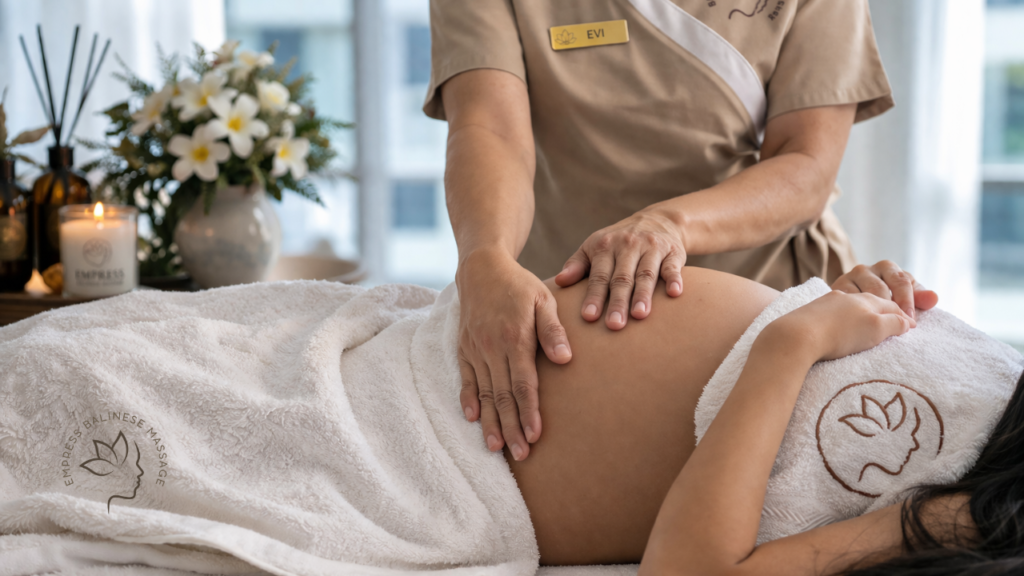
A personalised prenatal massage Dubai session may support better rest by helping an expectant mother feel calmer and more physically comfortable before bedtime. It may ease muscular tension and create an opportunity to mentally switch off, but it should not be presented as a cure for pregnancy insomnia.
Sleep can become more difficult as pregnancy progresses. A growing abdomen may make lying down uncomfortable, while frequent bathroom visits, physical sensitivity and difficulty finding a supportive position can interrupt rest.
At Empress Balinese Massage, prenatal massage is offered from 20 weeks onward. Each treatment is adapted around the client’s pregnancy stage, positioning needs, symptoms and comfort rather than following a fixed relaxation routine.
Why Can Sleep Become Difficult During Pregnancy?
Pregnancy sleep problems do not always have one clear cause.
During the earlier weeks, hormonal changes and nausea may contribute to tiredness. Later in pregnancy, the growing abdomen, additional body weight and difficulty settling into a comfortable position may make uninterrupted rest harder.
An expectant mother may also find herself waking because of:
- Lower-back or hip discomfort
- Tired or heavy legs
- Shoulder and neck tension
- Difficulty turning in bed
- Frequent bathroom visits
- Sensitivity to room temperature
- Worries about pregnancy or birth
- Difficulty mentally slowing down
Massage cannot remove every reason for disrupted sleep. It may, however, support some of the surrounding factors, particularly muscular tension, physical restlessness and difficulty relaxing.
How May Prenatal Massage Support Rest?
Prenatal massage creates a dedicated period in which the client can stop moving, rest in a supported position and receive pressure personalised around her body.
Research reviewing relaxation massage during pregnancy has reported possible benefits relating to stress, anxiety and back or leg discomfort in healthy pregnancies without complications. However, the evidence does not mean massage should be treated as a medical solution for insomnia or every pregnancy-related sleep problem.
During an Empress session, the therapist may focus on suitable areas such as the:
- Back
- Shoulders
- Arms
- Hips
- Legs
- Feet
The abdomen is not directly massaged, and hot stone massage is avoided throughout pregnancy.
The aim is to help the client feel more settled and physically comfortable, not to guarantee that she will sleep through the night.
Comfort Comes Before Pressure
A massage intended to support relaxation should not leave the client bracing against painful pressure.
Some pregnant clients request firm work because back, hip or shoulder tension has been affecting their ability to settle at night. Focused pressure may be appropriate in certain areas, but deeper does not automatically mean more relaxing.
The therapist begins by asking:
- Which areas feel uncomfortable at night?
- Which sleeping position currently feels easiest?
- Does discomfort appear when turning?
- Are the hips, back or shoulders particularly sensitive?
- Does either leg feel painful, hot or unusually swollen?
- Has a doctor or midwife provided any relevant advice?
Pressure is then adjusted by body area.
The shoulders may tolerate slower, more focused work, while the lower back or legs may require a gentler approach. If the client begins holding her breath, tightening her muscles or moving away from the therapist’s hands, the pressure is changed.
A client who is fighting the pressure is unlikely to feel ready for rest afterward.
Supported Side-Lying Helps the Body Settle
Empress performs prenatal massage predominantly in a supported side-lying position.
A Doomoo pregnancy pillow and additional pillows may be arranged around the abdomen, back, head, shoulders and legs. The therapist checks that the client is not holding herself in place or allowing the upper leg to pull uncomfortably through the hip and lower back.
NHS guidance recommends going to sleep on either side after 28 weeks and suggests supporting the abdomen with pillows and placing a pillow between the knees.
The massage setup is not intended to prescribe a sleeping position. However, it may help the client notice how thoughtful pillow placement changes her comfort.
For example:
- Support beneath the abdomen may reduce a pulling sensation.
- A pillow between the knees may help the upper leg feel more stable.
- Support behind the back may prevent the client from feeling as though she is rolling.
- The correct head-pillow height may reduce neck and shoulder strain.
The therapist adjusts the arrangement according to the client rather than following one standard setup.
What Does the Therapist Notice During the Session?
An experienced prenatal therapist pays attention to how easily the client relaxes into the table.
She may notice:
- Shoulders remaining lifted towards the ears
- The lower back tightening during position changes
- One hip rotating forward
- Shallow breathing when pressure increases
- Restlessness in the legs
- Difficulty allowing the head to rest
- One side feeling less comfortable than the other
These observations are not used to diagnose a sleep disorder or pregnancy condition.
They help the therapist decide whether to change the pillows, reduce the pressure, slow the massage or spend more time around a suitable area.
The client may arrive expecting attention only on her lower back, while the therapist notices that neck and shoulder tension is making it difficult for her whole upper body to settle.
A personalised massage considers these connected patterns without claiming to identify the medical cause.
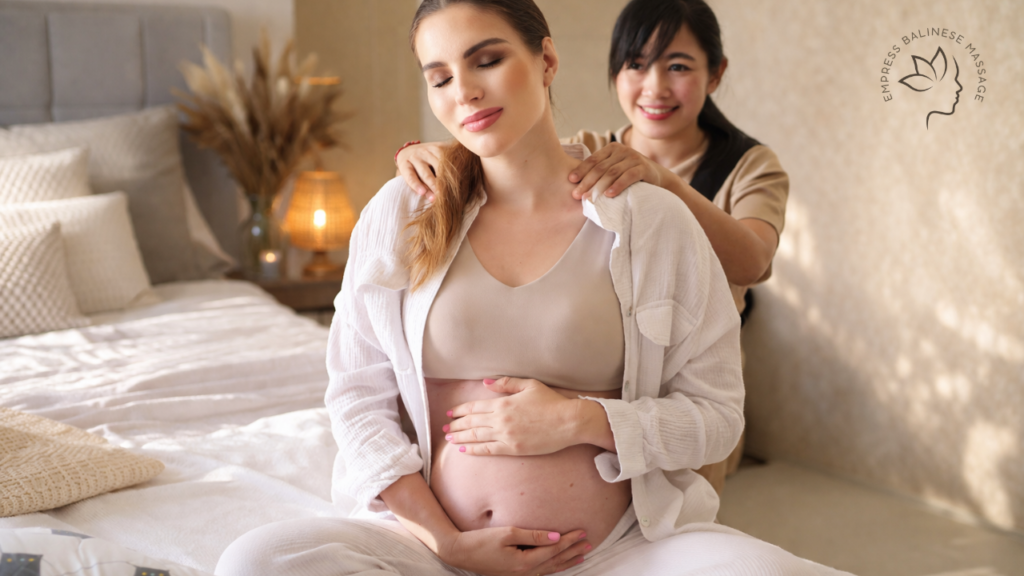
Why Home Massage Can Support a Calmer Evening
The hours after a massage can matter as much as the treatment itself.
Travelling through Dubai traffic, searching for parking or waiting for transport may interrupt the calm created during a spa appointment. With a home massage, the client can remain in her own space after the therapist leaves.
For an Empress home appointment, the therapist brings:
- A professional massage table
- Freshly laundered linens
- Clean towels
- Suitable massage oil
- A Doomoo pregnancy pillow
- Additional support pillows
The therapist arrives approximately 10 to 15 minutes early to complete the consultation and prepare the room without rushing.
Afterward, the equipment is packed neatly and quietly. The client can change into comfortable clothing, continue resting or begin her usual bedtime routine without another journey.
Massage does not guarantee sleep, but removing post-treatment travel can help preserve the feeling of calm.
Is an Evening Appointment Better?
An evening massage may feel helpful for a client who wants to move directly into a quiet bedtime routine. However, the best appointment time depends on the individual.
Some clients feel ready to sleep after massage. Others feel relaxed but prefer time to shower, eat or move around before bed.
The client should choose a time that fits naturally into her evening rather than expecting the massage itself to make her fall asleep.
After the appointment, it may help to:
- Keep the rest of the evening calm
- Wear loose, comfortable clothing
- Avoid returning immediately to demanding work
- Prepare supportive pillows before getting into bed
- Follow any sleep guidance provided by a doctor or midwife
NHS guidance also recommends relaxing before bedtime and limiting evening caffeine when sleep is difficult during pregnancy.
When Sleep Problems Need More Than Massage
Persistent sleep difficulty should not automatically be managed by booking more massage sessions.
Speak with a doctor or midwife if a lack of sleep is becoming difficult to manage. Sleeplessness accompanied by ongoing low mood, hopelessness or loss of interest in normal activities also deserves professional support.
Medical guidance is also important when disrupted sleep is connected with symptoms such as:
- Breathing difficulties
- Severe or worsening pain
- Regular painful contractions
- Bleeding or fluid leakage
- Severe headaches or visual changes
- Sudden or unusual swelling
- Pain, redness or heat affecting one leg
- Persistent anxiety or emotional distress
Massage is a supportive wellness service. It does not diagnose or treat insomnia, sleep apnoea, depression, anxiety disorders or pregnancy complications.
Can Regular Prenatal Massage Support a Sleep Routine?
Some clients find that an occasional or regular massage gives them dedicated time to slow down and reconnect with their comfort needs.
There is no single booking schedule suitable for every pregnancy.
The appropriate frequency depends on:
- Pregnancy stage
- General health
- Current symptoms
- Maternity guidance
- Personal preference
- How the client responds after treatment
Each appointment should begin with a new consultation. A session that felt appropriate one week should not be repeated automatically if the client’s symptoms, sensitivity or pregnancy circumstances have changed.
Frequently Asked Questions
Can prenatal massage help me sleep better?
Prenatal massage may support relaxation and physical comfort, which can make it easier for some clients to settle before bed. It cannot guarantee uninterrupted sleep or treat pregnancy insomnia. Ongoing sleep problems should be discussed with a doctor or midwife.
Is it better to book prenatal massage in the evening?
An evening appointment may suit clients who want to continue resting afterward, but it is not automatically better. Some people prefer an afternoon treatment and need time before bed. Choose a time that works naturally with your energy levels and usual routine.
Which areas are massaged to support relaxation?
The therapist may work on suitable areas such as the back, shoulders, arms, hips, legs and feet. The treatment is personalised according to where you feel tension and what is appropriate for your pregnancy. The abdomen is not directly massaged.
What position is used during the massage?
Empress predominantly uses supported side-lying positioning. A pregnancy pillow and additional pillows are arranged around the abdomen, back, head and legs. The position can be changed whenever you feel uncomfortable.
Can I request firm pressure before bedtime?
You may discuss your preferred pressure with the therapist, but firm pressure is not suitable for every area. The intensity should allow you to breathe normally and relax. Painful pressure may cause the muscles to tighten rather than settle.
Is aromatherapy used during pregnancy massage?
Scents and oils require additional care during pregnancy. The therapist will consider suitability, fragrance sensitivity, nausea and personal preference before using anything scented. A neutral option may be more comfortable for some clients.
Can prenatal massage treat pregnancy insomnia?
No. Prenatal massage is not a medical treatment for insomnia. It may form part of a calming wellness routine, but persistent sleep difficulties require guidance from a doctor or midwife.
Is prenatal massage safe for every pregnancy?
No massage is universally suitable for every pregnant client. Empress begins prenatal bookings from 20 weeks, but clients with high-risk pregnancies, bleeding, suspected blood clots, severe swelling or other concerns may need medical approval or may be advised to postpone treatment.
How often should I book massage for relaxation?
There is no fixed schedule suitable for everyone. Frequency should depend on your pregnancy stage, comfort, health circumstances and maternity guidance. The therapist reassesses your needs before every appointment.
Can I book prenatal massage at my Dubai hotel?
Hotel appointments may be available subject to therapist availability and the hotel’s visitor policies. Confirm access arrangements with the hotel before booking. The therapist brings the table, linens, towels, oil and pregnancy support equipment.
Create a Calmer Evening with Prenatal Massage
From 20 weeks onward, Empress offers personalised prenatal massage in the comfort of your Dubai home or hotel.
Each session uses supported side-lying positioning, carefully adapted pressure and a treatment plan shaped around how your body feels that day.
Speak with the Empress team if physical tension is making it difficult to settle at night, or consult your maternity healthcare provider when sleep problems are persistent or accompanied by concerning symptoms.
