
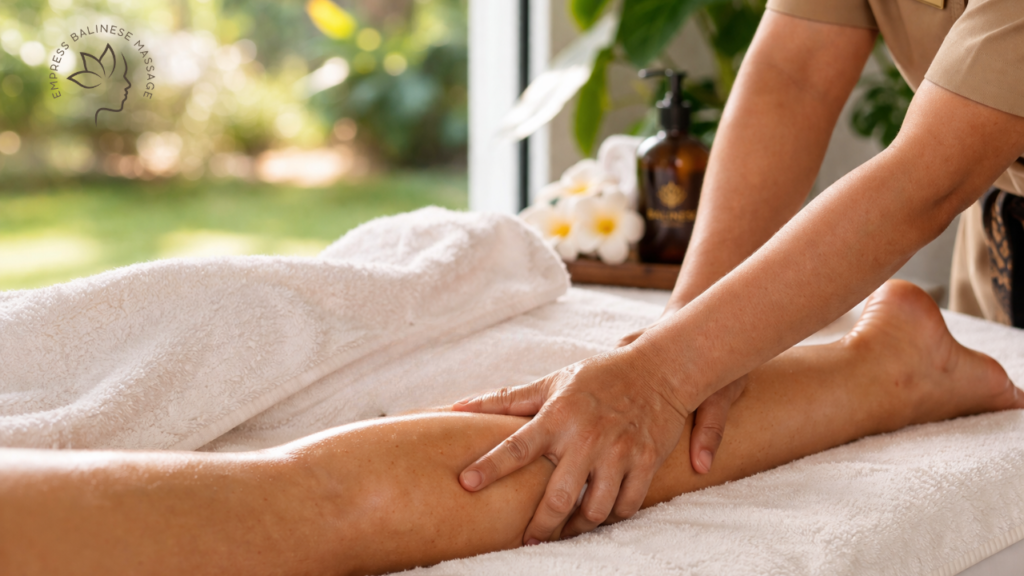
Thai massage is a traditional form of bodywork that combines assisted stretching, rhythmic pressure and guided movement. It is commonly performed while the client remains fully clothed, often on a firm floor mat rather than a raised massage table.
Unlike an oil-based relaxation massage, Thai massage may involve the therapist moving the client’s arms, legs and body through a series of supported positions. Hands, thumbs, palms, forearms, elbows or knees may be used to apply controlled pressure where appropriate.
Thai massage can feel active and movement-focused. Clients who prefer a smoother, oil-based treatment may find a Balinese massage Dubai experience more suitable.
How Is Thai Massage Performed?
Traditional Thai massage is usually provided on a padded mat placed on the floor.
The client wears comfortable clothing that allows free movement. Massage oil is not normally required because the therapist works over the clothing.
During the session, the therapist may:
- Apply rhythmic pressure
- Use palms or thumbs on suitable muscular areas
- Move the arms and legs gently
- Guide the body through assisted stretches
- Support the client while changing positions
- Work along the back, shoulders, hips and legs
- Adjust the range of movement according to comfort
The treatment may move between lying on the back, side or front, depending on the client’s mobility and the techniques being used.
A professional therapist should never force the body into a position simply because it is part of a traditional routine.
What Does Thai Massage Feel Like?
Thai massage can feel more active than many other massage styles.
Instead of remaining still while the therapist performs long oil-based movements, the client may be repositioned several times. The therapist may lift an arm, bend a leg or guide the upper body through a controlled stretch.
Some parts of the treatment may feel slow and grounding. Other parts may feel more energising or movement-led.
Clients may experience:
- Firm, rhythmic pressure
- Gentle pulling or stretching
- Compression through clothing
- Changes in position
- A combination of stillness and movement
- Focused attention around tired muscles
The treatment should remain controlled and manageable.
Sharp pain, joint strain, numbness or a feeling of being pushed beyond a comfortable range means the technique needs to change.
Is Thai Massage the Same as Yoga?
Thai massage is sometimes described informally as assisted yoga because the therapist moves the client through stretch-like positions.
However, the client is not expected to perform an exercise routine or hold difficult poses.
The therapist supports the movement and controls the pace. The client should be able to remain relaxed rather than actively working to maintain each position.
Thai massage is still a massage and bodywork service, not a yoga class or physiotherapy session.
It should not be promoted as a way to correct alignment, treat an injury or replace professional rehabilitation.
Does Thai Massage Use Oil?
Traditional Thai massage is usually performed without massage oil.
The client remains clothed, and pressure is applied through comfortable garments. This allows the therapist to use assisted movement and stretching without the skin becoming slippery.
This is one of the clearest differences between Thai and Balinese massage.
Balinese massage generally uses massage oil to support flowing movements, kneading and varied pressure directly over the skin.
Someone who enjoys the sensory feeling of oil and long massage movements may prefer Balinese massage. Someone who prefers to remain fully clothed and enjoys guided stretching may be more interested in Thai massage.
Thai Massage Versus Balinese Massage
Thai and Balinese massage both come from Asian wellness traditions, but the treatment experiences are noticeably different.
Position and Setup
Thai massage is commonly provided on a floor mat, with the client fully clothed.
Balinese massage is usually provided on a professional massage table, with massage oil and appropriate draping.
Movement
Thai massage may involve frequent position changes and assisted stretches.
Balinese massage generally allows the client to remain more passive while the therapist uses flowing and rhythmic techniques.
Pressure
Both treatments can include firm pressure.
Thai massage often uses compression through clothing, while Balinese massage may combine kneading, long movements and more focused pressure directly over suitable muscular areas.
Overall Experience
Thai massage may feel active, structured and stretch-focused.
Balinese massage usually feels more flowing, oil-based and relaxation-led while still allowing focused muscular attention.
Neither treatment is automatically better. The choice depends on how much movement, stretching and oil-based contact you prefer.
Who May Enjoy Thai Massage?
Thai massage may appeal to clients who:
- Prefer to remain fully clothed
- Enjoy gentle assisted stretching
- Like rhythmic pressure
- Feel comfortable changing positions
- Prefer a more active treatment
- Do not want massage oil
- Want a full-body bodywork experience
It may not suit someone who wants to remain completely still throughout the treatment or who prefers long, flowing massage movements.
Clients with limited mobility, recent injuries or joint sensitivity should explain this before treatment begins.
The therapist must adapt the session rather than expecting the client to fit every traditional technique.
Who May Prefer Balinese Massage?
Balinese massage may suit clients who want:
- A flowing full-body experience
- Massage oil
- Personalised pressure
- Rhythmic kneading
- Gentle stretching where appropriate
- A quieter and more passive treatment
- Focused work without frequent position changes
During an Empress Balinese massage, the therapist may move between broad, calming techniques and slower attention around areas of tension.
The treatment remains connected across the body rather than feeling like a series of separate stretches.
For clients seeking massage at home in Dubai, Balinese massage can also be provided on a professional massage table with fresh linens, towels and suitable oil brought directly to the property.
Is Thai Massage Painful?
Thai massage should not feel painfully forceful.
Some stretches or pressure techniques may create a strong sensation, but the client should still be able to breathe normally and avoid bracing against the movement.
The therapist should stop or adapt the technique if the client experiences:
- Sharp pain
- Joint discomfort
- Burning
- Numbness
- Tingling
- Dizziness
- Muscle cramping
- A feeling that the body is being forced
Flexibility differs from person to person. A position that feels easy for one client may be unsuitable for another.
A good therapist works within the client’s comfortable range rather than trying to achieve the deepest possible stretch.
Does Thai Massage Improve Flexibility?
Some clients may temporarily feel more mobile or less stiff after assisted stretching and movement.
However, Thai massage should not guarantee permanent flexibility changes.
Flexibility is influenced by many factors, including activity level, joint structure, previous injuries and regular movement habits.
Massage may form part of a wider wellness routine, but it does not replace appropriate exercise, physiotherapy or medical care.
The therapist should also avoid stretching areas affected by recent injury, severe pain or unexplained restriction.
When May Thai Massage Be Unsuitable?
Thai massage may need to be avoided or adapted when there is:
- A recent injury
- Recent surgery
- A suspected fracture
- Joint instability
- Severe osteoporosis
- Unexplained severe pain
- Significant swelling
- A suspected blood clot
- Active inflammation
- Severe varicose veins
- Medical advice to avoid massage or stretching
- Pregnancy without appropriate prenatal adaptation
Clients with ongoing medical conditions should seek guidance from a qualified healthcare provider where appropriate.
The therapist should never use stronger movement to overcome pain or restricted mobility.
Is Thai Massage Suitable During Pregnancy?
A standard Thai massage routine should not automatically be provided during pregnancy.
Assisted stretches, body positions and pressure must be reconsidered according to the pregnancy stage, symptoms and medical circumstances.
Pregnant clients require a prenatal massage service with appropriate consultation, supported positioning and pregnancy-specific safety procedures.
Empress provides prenatal massage from 20 weeks onward, predominantly using supported side-lying positioning. This is different from a standard Thai massage session.
Pregnant clients should always disclose their pregnancy when booking rather than selecting a general treatment without mentioning it.
What Should You Wear for Thai Massage?
Clients normally wear loose, comfortable clothing that allows the arms and legs to move freely.
Suitable options may include:
- Stretchable trousers
- A comfortable T-shirt
- Light activewear
- Clothing without restrictive belts or fastenings
Tight jeans, stiff fabrics or clothing that limits movement may make the treatment uncomfortable.
For Balinese massage, the client is professionally draped, and only the area being worked on is uncovered.
The therapist should explain the preparation process before either treatment begins.
How Long Does Thai Massage Take?
Thai massage sessions may vary in duration depending on the treatment style and the areas included.
A shorter appointment may focus on selected parts of the body, while a longer treatment may allow more time for full-body compression, movement and stretching.
The treatment should not be rushed simply to include every possible technique.
A focused, comfortable session is more useful than completing a long routine that becomes tiring or physically overwhelming.
What Should You Tell the Therapist?
Before any massage, share:
- Previous injuries
- Joint sensitivity
- Recent surgery
- Limited mobility
- Areas of pain
- Medical conditions
- Pregnancy
- Pressure preferences
- Movements that feel uncomfortable
- Advice from a doctor or physiotherapist
Massage therapists do not diagnose injuries or medical conditions.
Providing accurate information helps the therapist decide which movements should be adapted or avoided.
Frequently Asked Questions
What is Thai massage?
Thai massage is a traditional bodywork style combining rhythmic pressure, compression and assisted stretching. It is commonly provided on a floor mat while the client remains fully clothed.
Does Thai massage use oil?
Traditional Thai massage normally does not use oil. The therapist applies pressure and assisted movement through comfortable clothing. Balinese massage generally uses oil and flowing movements directly over the skin.
Is Thai massage painful?
It should not be painfully forceful. Some pressure or stretching may feel strong, but it should remain controlled. Tell the therapist immediately if you experience sharp pain, numbness or joint strain.
What is the difference between Thai and Balinese massage?
Thai massage is more movement and stretch-focused, often performed fully clothed on a mat. Balinese massage is normally oil-based and performed on a massage table using flowing movements, kneading and varied pressure.
Do I need to be flexible?
No. The therapist should adapt every assisted movement to your comfortable range. You should never be forced into a position because of limited flexibility.
Is Thai massage suitable for beginners?
It may be suitable when the therapist begins gently and adapts the pressure and stretches. First-time clients should explain their mobility, sensitivity and concerns before treatment.
Can Thai massage treat an injury?
No. Thai massage should not be presented as a treatment for injuries. Severe pain, swelling, weakness or movement problems should be assessed by an appropriate healthcare professional.
Is Thai massage suitable during pregnancy?
A standard Thai massage routine is not automatically suitable during pregnancy. Pregnant clients require a specialised prenatal service with supported positioning and pregnancy-appropriate pressure.
Which massage is more relaxing?
Balinese massage may feel more traditionally relaxing because it uses oil, flowing movements and fewer active position changes. Thai massage may suit clients who find stretching and rhythmic compression relaxing.
Does Empress provide Balinese massage at home?
Yes. Empress provides personalised Balinese massage in Dubai homes and hotels. The therapist brings a professional massage table, freshly laundered linens, clean towels and suitable massage oil.
Prefer Flowing Massage Over Assisted Stretching?
Thai massage may suit clients who enjoy clothed bodywork, guided movement and a more active treatment style. Balinese massage offers a different experience, with oil-based techniques, connected movements and pressure adapted across the full body.
For clients who prefer to stay relaxed on the massage table while the therapist manages the flow, Empress brings authentic Balinese massage directly to Dubai homes and hotels. Share your pressure preference and focus areas when booking so the treatment can be shaped around how you want the session to feel.

Pingback: Balinese vs Thai Massage: What’s the Difference? - Empress Balinese Massage