
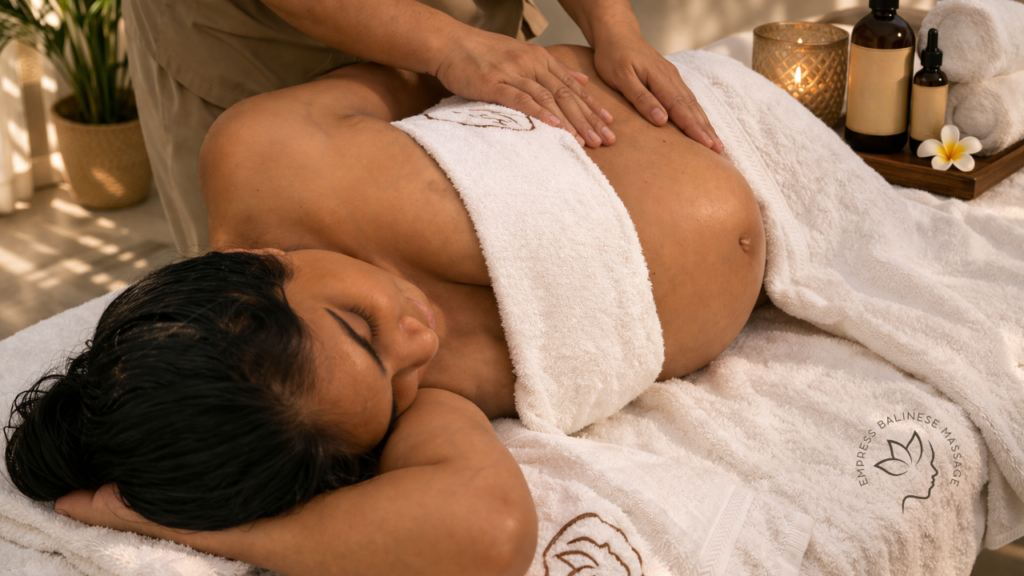
Gentle pregnancy massage Dubai may support relaxation and ease muscular tension around the lower back, hips and buttocks when a pregnant client is experiencing sciatica-like discomfort.
However, massage does not diagnose sciatica, remove pressure from a nerve or replace assessment by a doctor, midwife or physiotherapist.
Sciatica commonly causes sharp or burning pain that travels from the lower back or buttock down the back of one leg. It may also involve tingling, numbness or weakness. Back pain without symptoms travelling into the leg may have another cause.
At Empress Balinese Massage, every prenatal session begins with a consultation. The therapist considers the client’s symptoms, pregnancy stage, movement and comfort before deciding whether gentle massage is appropriate.
What Does Pregnancy Sciatica Feel Like?
Sciatica is a pattern of symptoms linked to irritation or compression of the sciatic nerve, which runs from the lower back towards the feet.
Symptoms commonly affect the buttock and the back of one leg. A client may describe:
- Sharp or burning pain
- Pain travelling towards the calf or foot
- Pins and needles
- Numbness
- Weakness
- Discomfort that worsens with certain movements
- Difficulty sitting or standing comfortably
Symptoms may begin suddenly or develop gradually. They can also become more noticeable during movement, coughing or sneezing.
Pregnant clients sometimes use the word “sciatica” for any pain around the lower back, hip or buttock. Yet pregnancy-related pelvic girdle pain and ordinary muscular back discomfort can produce symptoms in similar areas.
A therapist should therefore avoid assuming that every shooting or aching pain is true sciatica.
Why Can Sciatica-Like Pain Appear During Pregnancy?
Pregnancy changes how the body carries weight, stands, walks and moves between positions.
The muscles around the back and pelvis may begin working differently, while changes in posture or everyday movements can place additional strain on the surrounding areas. Pregnancy-related pelvic discomfort may also spread towards the thighs or back of the legs.
A client may unconsciously respond by:
- Placing more weight on one leg
- Taking shorter steps
- Avoiding one side while sleeping
- Tightening the buttock or hip muscles
- Using the arms to help with standing
- Sitting unevenly
- Protecting the lower back while turning
These patterns may increase muscular tension around an already uncomfortable area.
A prenatal therapist can observe these movements, but she cannot confirm whether the sciatic nerve is compressed or identify the medical cause of the pain.
How May Gentle Massage Provide Support?
Gentle massage may help surrounding muscles feel calmer and less guarded.
An NHS pregnancy-related pelvic pain resource notes that gentle massage around the lower back, thighs and buttocks may help relieve muscular tension.
This is an important distinction: massage works with suitable soft-tissue areas around the discomfort. It should not be described as directly treating the nerve.
During an Empress prenatal session, the therapist may use slow and controlled movements around appropriate areas such as the:
- Lower and upper back
- Buttocks
- Hips
- Outer thighs
- Shoulders
- Legs, when suitable
The treatment is adapted according to where the symptoms travel and how the client responds.
Why Strong Pressure May Make the Body Guard More
A client experiencing shooting pain may assume that deeper pressure is needed to “release” the area.
This is not always appropriate.
If the muscles are already guarding, strong pressure may cause the client to tighten further, hold her breath or move away from the therapist’s hands. Directly pressing the most painful point may also aggravate an already sensitive area.
The therapist may instead:
- Begin away from the strongest discomfort
- Use broad, gentle movements
- Reduce pressure near sensitive areas
- Work around the hips and back gradually
- Add more pillow support
- Avoid techniques that reproduce travelling pain
- Stop working on an area if symptoms increase
Prenatal massage should never involve pushing through sharp, burning or electric pain.
What Does the Therapist Notice First?
Before treatment, the therapist may observe how the client enters the room, sits, stands and changes direction.
She may notice:
- One leg taking more weight
- One hip turning forward
- A shorter step on one side
- The client protecting her lower back
- Difficulty lowering herself onto the table
- Muscle tightening before touch
- Changes in breathing when turning
- One side feeling less comfortable in side-lying
These observations help shape the pillow setup, treatment sequence and pressure.
They are not used to diagnose sciatica or correct the client’s posture. Their purpose is to make the massage more comfortable and responsive.
How Side-Lying Supports the Session
Empress performs prenatal massage predominantly in a supported side-lying position.
A Doomoo pregnancy pillow and additional pillows may be placed around the abdomen, back, head and legs.
For a client with sciatica-like symptoms, support between the knees and beneath the upper leg can be especially important. If the upper leg drops forward without support, the hip and lower back may feel more strained.
The therapist may also place support behind the back so the client does not need to use her muscles to remain on her side.
The pillow arrangement is adjusted until the client can settle comfortably. If pain begins travelling further down the leg or the position creates numbness or tingling, the setup should be changed.
Is Prenatal Massage a Treatment for Sciatica?
No. Prenatal massage is a wellness service, not a medical treatment for sciatica.
It may support relaxation and muscular comfort, but it cannot guarantee that nerve pain will improve. The therapist does not manipulate the spine, correct pelvic alignment or remove pressure from a nerve.
Symptoms that are persistent, worsening or affecting normal activities should be discussed with a maternity healthcare provider. Medical professionals may recommend physiotherapy, suitable exercises or another form of assessment depending on the symptoms.
Massage may be included as part of a wider comfort routine when it is considered appropriate.
When Should Massage Be Postponed?
Massage should not proceed when symptoms suggest urgent assessment may be needed.
Seek urgent medical help if pain is accompanied by:
- Severe or worsening weakness in both legs
- Numbness around the genitals, inner thighs or buttocks
- Difficulty starting urination
- Loss of bladder or bowel control
- Inability to feel when the bladder is full
- Sciatica-like symptoms affecting both sides
These can be signs of a serious back condition requiring immediate hospital treatment.
Pregnant clients should also contact their doctor or midwife urgently if back pain is accompanied by vaginal bleeding, fever, pain while urinating or pain beneath the ribs. Very painful backache should also be medically discussed.
The massage should be postponed if there is active bleeding, severe or unusual swelling, suspected blood clot or another concern requiring maternity assessment.
How Empress Personalises the Treatment
Empress accepts prenatal massage appointments from 20 weeks onward.
Before beginning, the therapist asks about:
- Where the discomfort begins
- Whether it travels into the leg
- The type of sensation
- Numbness, tingling or weakness
- Movements that worsen the symptoms
- Medical advice already received
- Comfortable sleeping positions
- Current pregnancy concerns
The therapist then arranges the client in a supported side-lying position and begins with gentle contact.
If the client’s symptoms increase, the pressure is reduced or the area is avoided. The therapist may spend more time around suitable surrounding areas rather than repeatedly pressing the painful point.
The abdomen is not directly massaged, and hot stone massage is avoided during pregnancy.
Why Home Massage Can Feel More Manageable
Travelling with back, hip or leg discomfort can make a massage appointment feel like another physical task.
For an Empress home appointment, the therapist brings the massage table, freshly laundered linens, clean towels, suitable oil, a Doomoo pregnancy pillow and additional support equipment.
She arrives approximately 10 to 15 minutes early to set up and complete the consultation without rushing.
After the treatment, the client can remain at home rather than sitting in a car, walking through a car park or managing Dubai traffic immediately after the session.
This does not change the medical cause of the symptoms, but it can make the wellness experience calmer and more comfortable.
Frequently Asked Questions
Can pregnancy massage help sciatica?
Pregnancy massage may support muscular relaxation around the lower back, hips, buttocks and thighs. It does not treat nerve compression or guarantee relief from sciatica. Persistent or worsening symptoms should be assessed by a doctor, midwife or physiotherapist.
How do I know whether I have sciatica?
Sciatica often causes sharp or burning pain that travels through the buttock and down the back of one leg. Tingling, numbness or weakness may also occur. Only a qualified healthcare professional can properly assess the cause of your symptoms.
Can the therapist apply firm pressure?
Pressure is personalised, but strong pressure is not automatically suitable. The therapist begins gently and avoids techniques that increase shooting pain, tingling or numbness. You should tell her immediately if symptoms begin travelling further down the leg.
Where does the therapist massage?
The therapist may work around suitable areas such as the back, hips, buttocks, shoulders and outer thighs. The exact treatment depends on your symptoms, comfort and suitability. The abdomen is not directly massaged.
What position is used?
Empress predominantly uses supported side-lying positioning. A pregnancy pillow and additional pillows support the abdomen, back, head and legs. The setup can be changed if one side increases discomfort.
Should I see a physiotherapist?
Speak with your doctor or midwife if pain is severe, worsening or affecting your usual activities. They may recommend assessment by an obstetric or pelvic-health physiotherapist.
When is sciatica an emergency?
Seek emergency care for numbness around the genitals or buttocks, severe or worsening weakness in both legs, symptoms on both sides, or new bladder or bowel control problems.
Does Empress offer prenatal massage before 20 weeks?
No. Empress accepts prenatal massage bookings from 20 weeks onward. Every session begins with a consultation and is adapted according to the client’s pregnancy stage, symptoms and comfort.
Book Gentle Prenatal Massage Support in Dubai
From 20 weeks onward, Empress offers personalised pregnancy massage in your Dubai home or hotel.
The therapist uses supported positioning, controlled pressure and careful observation to work around suitable muscular areas without claiming to treat the sciatic nerve.
Speak with your maternity healthcare provider before booking if the pain is severe, persistent, worsening or accompanied by numbness, weakness or changes in bladder or bowel control.
